What if a powerful AC unit still left your home uncomfortable? Cooling depends on more than the equipment. How well the system suits your home, moves air, and responds to everyday use all matter. If you’ve wondered how an air conditioner actually cools a house, you’re not alone.
In Edmonton, understanding the basics can make it easier to choose an AC system, use it wisely, and spot when something isn’t working as it should. This guide explains how air conditioning moves heat out of indoor air, how central and ductless systems differ, and what efficiency labels can tell you. You’ll also learn how system sizing, airflow, and thermostat settings affect comfort and energy use.
When a simple homeowner check doesn’t resolve a problem, professional service can help identify the cause. We’ll cover common signs that may call for AC repair, and when installation or maintenance may support reliable cooling. Knowing how your system works can help you make informed decisions and keep comfort in focus.
Key Takeaways
- AC comfort depends on how well the system suits your home, not just how powerful the unit is.
- Refrigerant carries heat from indoors to outdoors as part of the cooling process.
- Compare central and ductless setups by considering how each delivers cooling and what your home already has.
- If comfort drops, start with safe checks such as thermostat mode, the accessible filter, and clear supply vents.
- Installation, maintenance, or repair from an Edmonton HVAC team can help address different cooling needs.
What Does AC Do in an Edmonton Home?
Air conditioning (AC) removes heat from indoor air and moves it outdoors, helping make a home feel cooler. Rather than creating cold air, a typical system transfers heat away from the rooms it serves. During a warm spell, that can make it more comfortable to relax, sleep, or work indoors.
Comfort can vary from room to room. Sunlight, the number of people in a space, and how air moves through the home all play a part. Understanding what cooling does, and what it doesn’t do, helps set practical expectations.
For a visual overview of the cooling process, watch this video:
How Is Air Conditioning Different from Ventilation?
Cooling transfers heat: an air conditioner draws heat from indoor air and releases it outdoors. Ventilation exchanges indoor air with outdoor air or moves air through a space to support circulation. These functions can work together, but they aren’t interchangeable. For a broader overview of system components and functions, see How HVAC systems work.
A central AC system may circulate indoor air through the home’s ductwork without bringing in outdoor air. It can, for example, cool air in a living room and send it through supply vents to other rooms, while a separate ventilation setup handles fresh-air exchange. Cooler air doesn’t necessarily mean outdoor air is entering. The system’s design determines how ventilation is provided.
Why Does Home Cooling Matter During Edmonton Summers?
Comfort is personal and depends on the home as well as the weather. A sunny upstairs bedroom may feel warmer than a shaded main-floor room, while a busy kitchen can gain heat from cooking and activity. Restricted airflow can also leave a room warmer or stuffier while other areas cool down.
Notice where and when discomfort occurs. Does one room warm up in the afternoon, or does the whole house feel uncomfortable? These details can help distinguish a localized airflow or sun-exposure issue from a broader cooling concern.
- Sunlight: Direct afternoon sun can make a room feel warmer.
- Occupancy: People, cooking, and electronics add heat indoors.
- Airflow: Blocked or limited circulation can leave rooms less comfortable.
Rather than expecting every room to feel identical, use these patterns to understand your home’s comfort needs. If the AC isn’t keeping up, noting which spaces are affected gives you a useful starting point for further checks.
How Does a Residential AC System Cool the Air?
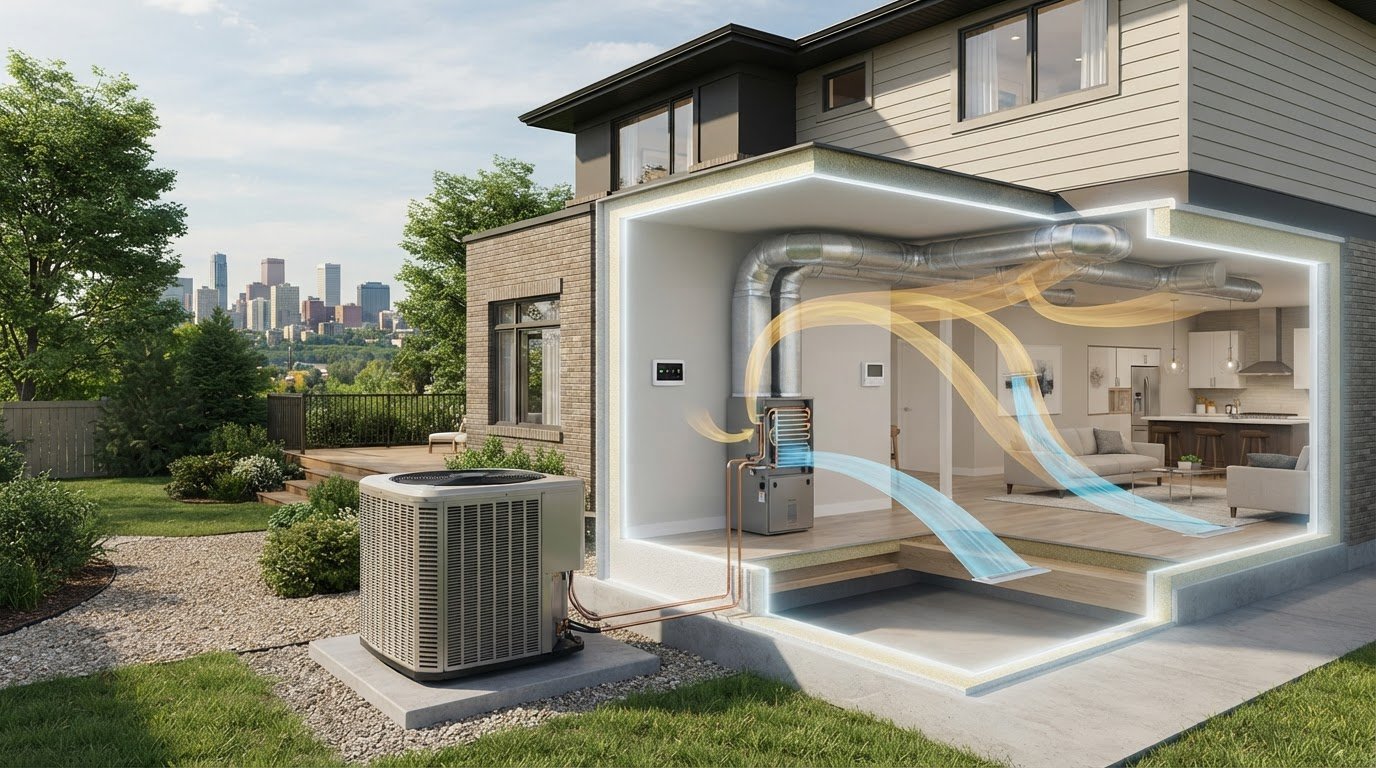
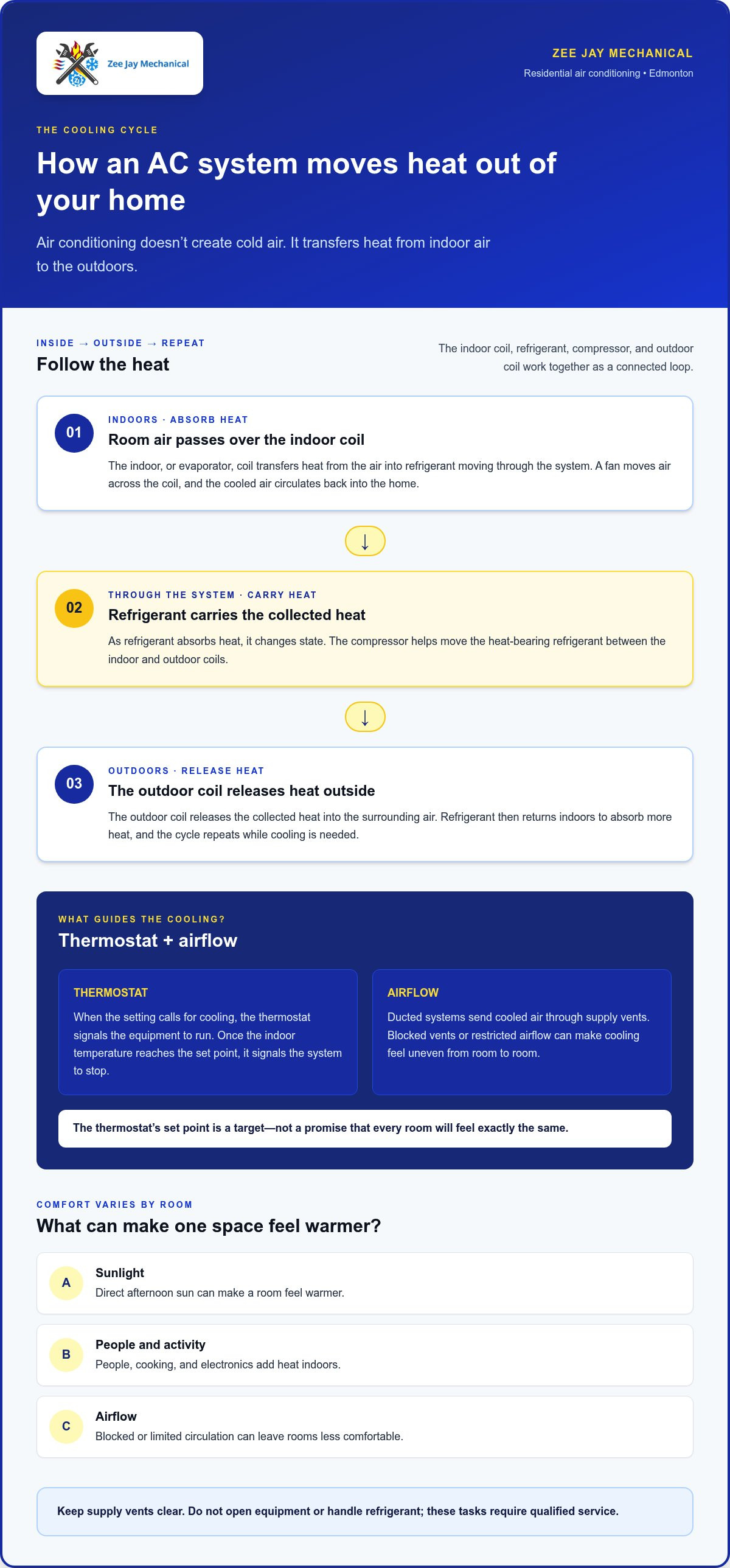
A residential AC system cools a home by moving heat, not by making it disappear. Indoor air passes over a cold coil, transferring heat to refrigerant circulating through the system. The refrigerant carries that heat to the outdoor unit, which releases it outside. The cooled indoor air then circulates back through the home, and the process repeats while cooling is needed.
In short, the indoor coil transfers heat into refrigerant, the compressor moves the heat-bearing refrigerant to the outdoor coil, and that coil releases the heat outside before the cycle repeats.
What Do the Main AC Components Do?
The indoor coil, also called the evaporator coil, absorbs heat from air moving across its surface. A fan draws or pushes household air over the coil, then the system sends the cooler air back into the living space. As refrigerant absorbs and carries heat, it changes state. It’s this heat transfer that cools the home, not a supply of cold air from outdoors.
The compressor helps move refrigerant between the indoor and outdoor coils. At the outdoor unit, the coil releases the collected heat into the surrounding air. The refrigerant then returns indoors to absorb more heat. Because the components work as a connected loop, a concern with one part can affect the cooling process as a whole. Don’t open equipment or handle refrigerant. These tasks require qualified service.
How Do the Thermostat and Airflow Affect Cooling?
The thermostat controls when the system runs. When its setting calls for cooling, it signals the equipment to operate. Once the indoor temperature reaches the set point, the thermostat signals the system to stop. The set point is a target, not a guarantee that every room will feel exactly the same. Sunlight, room use, and airflow can affect comfort throughout the home.
In a ducted home, cooled air travels through ductwork and leaves through supply vents. A ductless system uses indoor air handlers to deliver cooling directly to the rooms or zones they serve. In either setup, blocked vents or restricted airflow can make cooling feel uneven. Keep supply vents clear, but leave system diagnosis and internal adjustments to qualified technicians.
Cooling and indoor air quality are related, but they aren’t the same job. An air conditioner’s main purpose is to transfer heat. Filtration and ventilation depend on the system and other home equipment. The U.S. Environmental Protection Agency’s indoor air quality and HVAC guidance offers general information, though it isn’t specific to Canadian requirements or conditions.
If your system runs but doesn’t cool as expected, or airflow seems unusually weak, professional AC repair and installation in Edmonton can help identify the issue and restore dependable operation.
Central AC or Ductless Cooling: Which Setup Fits Your Home?
Central and ductless systems can both cool a home, but they deliver that cooling differently. Central AC sends cooled air through ductwork, while a ductless setup uses indoor units to serve particular rooms or zones. The right fit depends on your home’s layout, existing equipment, and where you want cooling. Neither option is right for every property.
| Feature | Central ducted AC | Ductless cooling |
|---|---|---|
| How it distributes cooling | Moves cooled air through ducts to supply vents around the home. | Delivers cooling from indoor units installed in the rooms or zones they serve. |
| Existing home features | Uses existing ductwork, where suitable, to distribute air. | Doesn’t rely on a home’s central duct network to deliver air to each served area. |
| Planning focus | Duct layout, airflow, and compatibility with existing equipment. | Room placement, number of areas to cool, and equipment compatibility. |
When Does Central Air Conditioning Make Sense?
A central system may be worth considering if your home already has ductwork that can distribute cooled air through the spaces you use. Existing ducts are a useful starting point, but their condition, layout, and compatibility still matter. Having ducts doesn’t automatically make a home a perfect fit; planning should account for how air moves through the property.
When Might Ductless Cooling Be Considered?
Ductless cooling may suit a home where targeted, room-by-room comfort is a priority, or where central ductwork isn’t part of the existing setup. Indoor units serve selected areas, so placement and the home’s layout affect the plan. The configuration also depends on compatible equipment and your comfort goals. An assessment can help determine how well the arrangement would serve the rooms you want to cool.
Before comparing systems, note which rooms you want to cool and how they’re used. A sunny bedroom, a frequently occupied living area, or an addition may have different comfort needs. Consider whether your home has ductwork and what heating equipment is already in place. These details help shape a practical discussion about air distribution and system fit.
- Map the spaces: Identify rooms that feel uncomfortable and when you notice it.
- Look at existing features: Note available ductwork and current heating equipment.
- Set comfort priorities: Decide whether you want cooling throughout the home or focused on particular areas.
System planning should account for the home, not just the cooling unit. Zee Jay Mechanical’s AC installation buying guide offers more detail to help Edmonton homeowners prepare for an installation decision.
What Can Homeowners Check When AC Comfort Falls Short?
If your home isn’t cooling as expected, a few basic checks may rule out simple settings or airflow issues. Keep checks external and low risk. Don’t remove equipment panels, reach inside the system, or handle refrigerant. Stop and seek professional help if you notice an unusual odour, an electrical concern, or signs of a refrigerant problem.
Which Basic AC Checks Are Safe to Do Yourself?
Work through these checks in order. If the issue continues, note what you observed rather than inspecting internal components.
- Check the thermostat. Confirm it’s set to cooling, not heating or fan-only, and that the temperature setting is below the current room temperature. If it uses batteries, follow the thermostat’s instructions for checking or replacing them.
- Look at the accessible filter. A filter that appears loaded with dust may restrict airflow. Follow the filter or equipment instructions for inspection and replacement. Don’t force a filter into place or use a different type without checking the system requirements.
- Clear the supply vents. Make sure registers aren’t shut or covered by furniture, curtains, or stored belongings. Keep the path to the vents open so air can reach the room.
After these simple checks, give the system time to respond. Compare the affected room with other areas, and note whether cooling improves or remains uneven. This information can help explain the concern during a service visit.
When Should an Edmonton Homeowner Call for AC Service?
Arrange professional service if cooling remains poor after the basic checks, or if the system repeatedly stops and starts without maintaining comfort. Unusual rattling, buzzing, or other new noises deserve attention, as does persistent water around the equipment. Don’t assume the cause or attempt an internal repair.
Take unusual odours seriously. If you smell something burning or notice a possible electrical problem, stop using the system if you can do so safely, stay clear of exposed wiring or equipment, and seek qualified help. Experienced trade specialists such as Inlightec Electrical Solutions emphasize that dedicated circuits, isolators, and electrical connections for major cooling units should always be evaluated by licensed professionals. If you suspect a refrigerant issue, don’t touch the unit or attempt to add refrigerant. Qualified technicians can inspect the equipment and determine the appropriate next step.
Keep a short record of when the problem began, which rooms are affected, what the thermostat displays, and whether you’ve noticed noises, odours, or water. These details can help a technician understand what’s happening.
If the checks don’t restore comfortable cooling, contact Zee Jay Mechanical for AC repair in Edmonton. A professional assessment can help identify the cause without putting you at risk from electrical components or refrigerant.
When Can Zee Jay Mechanical Help With AC in Edmonton?
Once you understand your system and have tried safe homeowner checks, professional support can help with a persistent problem or a planned upgrade. Zee Jay Mechanical is an Edmonton HVAC provider offering residential and commercial air conditioning installation, repair, and maintenance. Certified technicians can assess your system and discuss next steps based on the property and its cooling needs.
These services address different situations. Installation is for a new system or a replacement. Maintenance helps keep equipment in working condition and can identify concerns that may need attention. Repair focuses on diagnosing and addressing a system that isn’t operating as expected. The right service depends on what’s happening, the equipment’s condition, and the comfort goals for the space.
What AC Work Can Zee Jay Mechanical Support?
For a home or commercial property, installation planning should account for the building, existing equipment, and how cooling needs to reach the spaces people use. A system that suits one layout may not fit another, so the property and project requirements matter. Zee Jay Mechanical provides air conditioning installation for Edmonton homeowners and businesses.
If cooling becomes inconsistent, the system stops working properly, or a concern remains after basic checks, repair can help identify what’s affecting operation. Maintenance supports ongoing system care, while repair responds to a current issue. For commercial properties, maintenance can support ongoing HVAC care. In each case, the system’s condition and the building’s requirements help shape the work.
Zee Jay Mechanical also provides 24/7 emergency support for urgent mechanical issues. Homeowners can turn to the team when an urgent heating or cooling problem arises.
What Happens When You Request AC Help?
Start by describing the issue or project. For a repair request, useful details include what the system is doing, when the problem began, and which areas are affected. For installation, share what you’re hoping to improve and any relevant information about the property or existing equipment. You don’t need to diagnose the equipment yourself.
The team can discuss the concern, assess the system or project requirements, and explain next steps. A professional assessment connects symptoms or goals to the work that may be appropriate, whether that’s installation, maintenance, or repair. Zee Jay Mechanical’s certified technicians help Edmonton property owners make informed decisions about comfort and system care.
If you’re ready to discuss a cooling concern or an installation project, contact Zee Jay Mechanical about AC service. A straightforward conversation is a practical next step toward understanding what your home or business needs.
Take the Next Step Toward Reliable Home Comfort
Comfort needs can change as your household, routines, or property change. Use what you’ve noticed at home to guide your next decision: which spaces matter most, when comfort falls short, and whether you’re planning an upgrade or responding to a problem. A clear starting point helps turn uncertainty about your AC into a practical conversation about the next step for your property.
Zee Jay Mechanical is an Edmonton-based HVAC service provider with certified technicians who handle AC installation, repair, and maintenance. Whether you’re considering a new system or need help with an existing one, share your goals and concerns with the team to discuss suitable support.
Talk with Zee Jay Mechanical about AC service in Edmonton, and move forward with greater confidence in your home’s comfort.
Frequently Asked Questions
Does an air conditioner bring fresh air into a home?
Usually, no. Most home air conditioners recirculate indoor air rather than drawing in outdoor air. Fresh-air exchange depends on the home’s ventilation setup, which may operate separately from cooling equipment. If a room feels stuffy, opening a window when outdoor conditions are suitable may help temporarily, but it isn’t a replacement for a properly planned ventilation system. Check your home’s equipment information to understand how it manages outdoor air.
Can I run my AC when it is cool outside?
Only if the equipment’s instructions allow cooling at the outdoor temperature you’re experiencing. Operating limits vary by system, and running cooling outside its approved range may affect operation or damage components. Check the owner’s manual before using the system during a cool Edmonton evening or shoulder season. If the guidance is unclear, leave cooling off until conditions are within the specified range and seek advice from a qualified technician.
Does air conditioning remove humidity from the air?
Yes, an air conditioner can remove some moisture as indoor air passes over its cold coil, where water may condense and drain away. How much moisture it removes depends on operating conditions and the system. If your home still feels damp, don’t assume the AC is the only cause. Persistent condensation, musty smells, or moisture on windows can have other sources and may need a closer assessment.
Why is one room warmer than the rest of my home?
A room may stay warmer if air can’t circulate back out easily. For example, a closed bedroom door may limit airflow if the room has no clear return-air path. A thermostat near a cooler hallway can also register a different temperature from a sunny room at the other end of the home. Note when the temperature difference occurs and whether changing the door position affects comfort.
How often should a home AC system be serviced?
Follow the maintenance schedule in your equipment’s manual, since service needs can differ by system and how it’s used. Regular professional attention can help identify wear, drainage concerns, or operating changes before they become more disruptive. For routine checkups or equipment troubleshooting, HVAC specialists such as petersheatingllc.com provide professional inspection and maintenance services. If cooling performance shifts, the system makes new noises, or it runs differently than usual, arrange an assessment rather than waiting for the next scheduled service.
Can air conditioning improve indoor air quality?
It can support air cleanliness when the system’s filter is suitable for the equipment and kept in the condition its instructions recommend. A filter may capture some airborne particles, but it won’t remove every indoor pollutant or correct a source such as smoke or excess moisture. For targeted filtration needs, an appropriately selected air purifier may complement the home’s HVAC system.
Is a heat pump the same as an air conditioner?
They use a similar heat-transfer process, but a heat pump can provide both cooling and heating by reversing the direction of heat movement. A conventional air conditioner is designed to cool, while a home’s heating is handled by separate equipment. Heat pump operation and suitability depend on the specific equipment and property, so review system details before treating the two options as interchangeable.
Disclaimer
The content of this article is for the general information purpose. Please contact us if you have any questions.