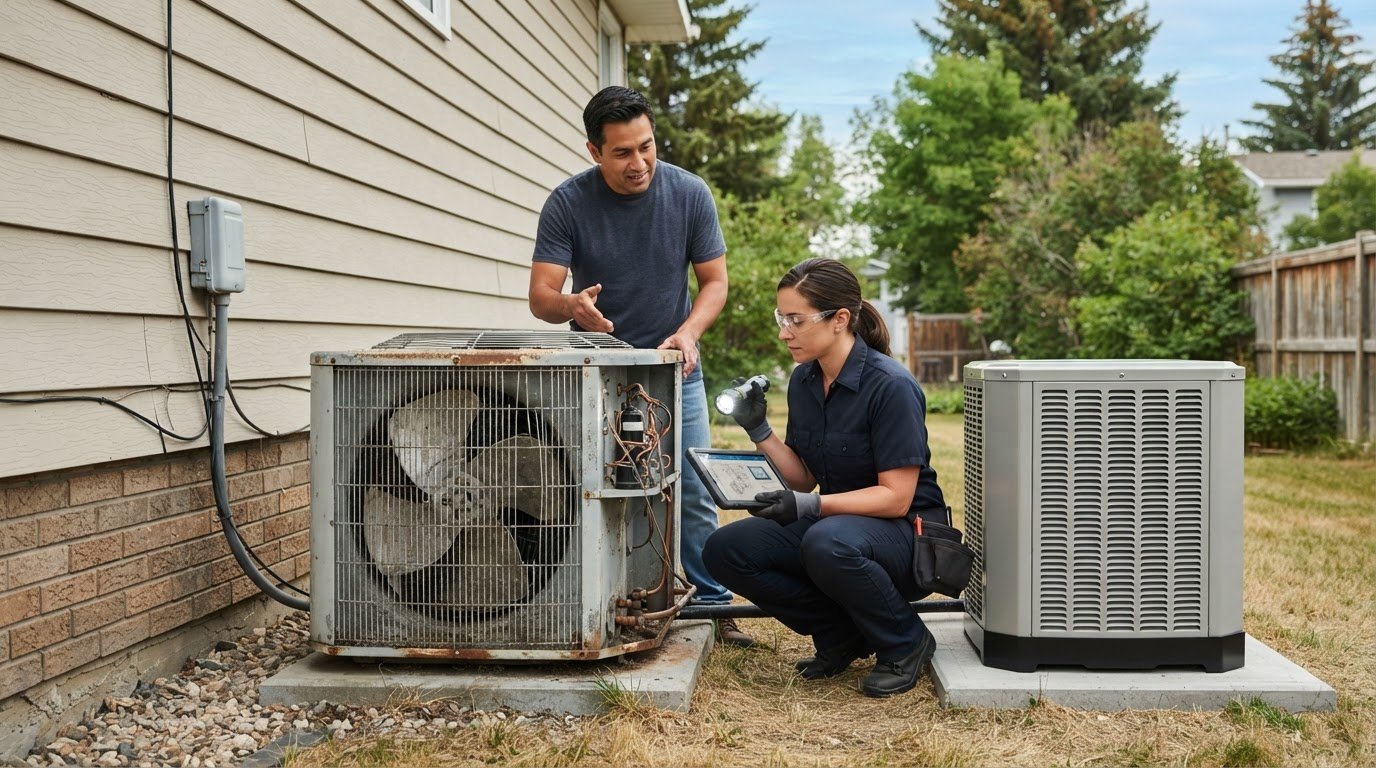
What if the age of your air conditioner matters less than what’s actually failing? If you’re asking, “is repairing a 20-year-old air conditioner worth it,” the answer depends on the fault, the system’s overall condition, and the likelihood of further breakdowns. At 20 years old, a central AC is at the upper end of its typical 15-to-20-year lifespan, so the immediate repair is only part of the decision.
It’s reasonable to worry about paying for a repair only to face another failure soon after. A useful diagnosis should explain what failed, what the repair involves, and whether other parts of the system show signs of trouble. Your repair history and how well the unit cools also help put the recommendation in context.
This guide compares repair prospects with replacement considerations for Edmonton homeowners. You’ll learn which warning signs matter, what to ask about the diagnosis, and how to weigh the system’s condition against your comfort needs. The goal is a practical next step, whether that means repairing the equipment or planning for a replacement.
Key Takeaways
- Age alone doesn’t determine whether an older AC should be replaced; its condition, repairability, and expected future use matter too.
- A useful inspection connects symptoms to specific findings, including cooling performance, electrical condition, airflow, and visible wear.
- To decide if repairing a 20-year-old air conditioner is worth it, compare the repair scope with the system’s condition and history of repeat failures.
- Record symptoms and service history before reviewing the diagnosis and comparing options for Edmonton’s seasonal cooling needs.
- Zee Jay Mechanical provides AC repair and installation in Edmonton to help homeowners assess an aging system and consider next steps.
Is a 20-year-old air conditioner automatically due for replacement?
No. A 20-year-old air conditioner deserves a careful assessment, but age alone can’t tell you what has failed or whether a repair is sensible. The decision depends on the unit’s condition, whether the fault can be repaired reliably, how well the system cools, and how you expect to use it in the years ahead.
Symptoms and inspection findings matter more than a birthday. A well-maintained unit with one identifiable issue presents a different situation from a system with recurring problems and declining performance. An inspection should connect what you’ve noticed to the equipment’s condition, rather than treating age as a diagnosis. For background on how cooling equipment works, see this overview of the Air conditioner.
A homeowner-focused video can also offer context on repair-versus-replacement decisions:
What can the system’s age tell you, and what can’t it?
Age is a reason to look more closely, not an automatic replacement rule. Your service history can show whether the unit has needed repeated attention or operated consistently. Maintenance and current operating condition matter too: two systems of the same age may have very different repair prospects.
Equipment age is context, not a repair-versus-replacement diagnosis. The findings should clarify what’s wrong, whether the affected part can be repaired, and whether the rest of the system appears serviceable. If you’re asking, “is repairing a 20-year-old air conditioner worth it,” those details are more useful than age alone.
Which warning signs deserve a closer look?
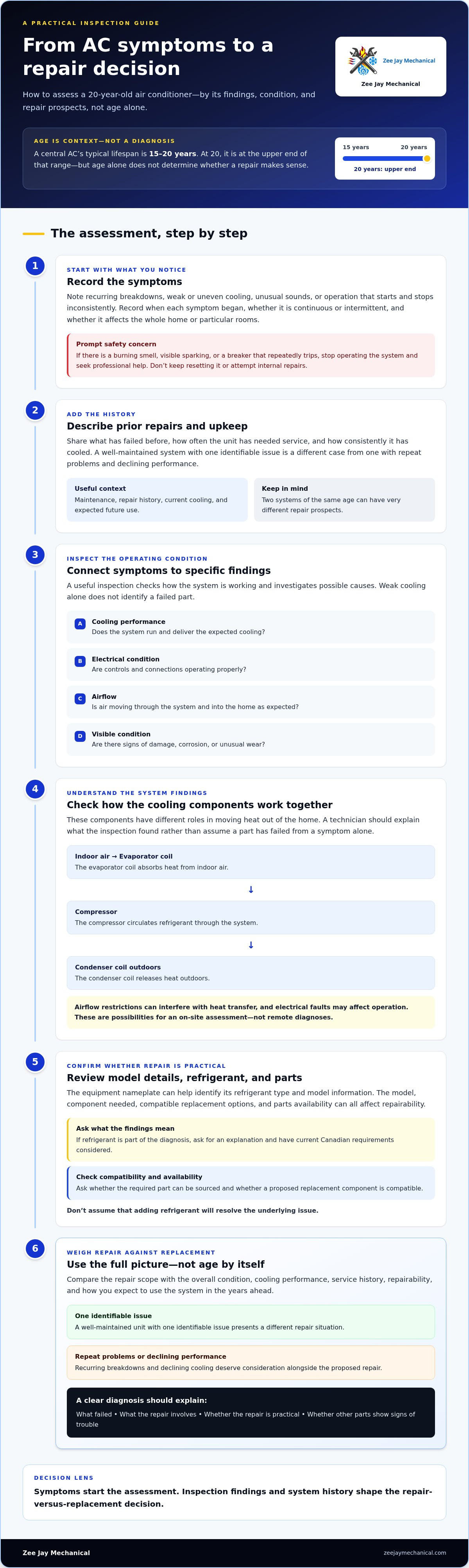
Pay attention to recurring breakdowns, weak cooling, unusual sounds, or operation that starts and stops inconsistently. Note when each symptom began, whether it happens continuously or intermittently, and whether it affects the whole home or particular rooms. These observations help describe the problem, but none identifies a failed component on its own.
Separate declining performance from issues that call for prompt attention. Weak or uneven cooling and repeated service needs are reasons to arrange an assessment. If you notice a burning smell, visible sparking, or a breaker that repeatedly trips, stop operating the system and seek professional help rather than continuing to reset it. Don’t open electrical panels or attempt internal repairs yourself.
For Edmonton homeowners, have the symptoms assessed and the findings explained before choosing repair or replacement. Zee Jay Mechanical provides air conditioning repair and installation in Edmonton, helping homeowners base the decision on the system’s condition and repair prospects.
What does a technician need to inspect on a 20-year-old AC?
A useful inspection connects the problem you’ve noticed to specific findings on the equipment. If the AC runs but doesn’t cool well, for example, the technician should assess its performance and investigate possible causes instead of assuming a particular part has failed. The same applies to unusual sounds, short cycling, or a system that stops unexpectedly.
An inspection should explain both the fault and its implications. That means identifying what the findings show, whether a repair is practical, and how related components affect the outlook. A clear diagnosis gives you a stronger basis for deciding whether to repair or replace than a list of symptoms alone.
Which components and operating conditions matter?
Several parts work together to move heat out of your home. The compressor circulates refrigerant through the system; the condenser coil releases heat outdoors, while the evaporator coil absorbs heat from indoor air. If any part of that process is affected, cooling can suffer. Weak cooling alone, however, doesn’t prove that a coil or compressor has failed.
The technician should assess system performance, electrical connections and controls, airflow through the equipment, and visible wear or damage. Restricted airflow can interfere with heat transfer, while an electrical fault may prevent components from operating as intended. These are possibilities to investigate, not remote diagnoses. ASHRAE’s technical resources offer broader context on HVAC systems and industry practices, but the condition of your unit requires an on-site assessment.
- Cooling performance: Does the system run and deliver the expected cooling?
- Electrical condition: Are controls and connections operating properly?
- Airflow: Is air moving through the system and into the home as expected?
- Visible condition: Are there signs of damage, corrosion, or unusual wear?
How do refrigerant and parts availability affect repairability?
The equipment’s nameplate can help identify its refrigerant type and model information. Refrigerant type matters because repair procedures and compatible components depend on the system’s design. If refrigerant is part of the diagnosis, ask the technician to explain the findings and consider current Canadian requirements before deciding. Don’t assume that adding refrigerant will resolve the underlying issue.
Parts availability is another system-specific consideration. The model, component needed, and compatible replacement options can all affect whether a repair is practical. A 20-year-old unit isn’t automatically impossible to repair, but the technician should explain if a part can’t be sourced or a proposed component isn’t compatible.
Previous repairs add useful context. Share what failed, what work was completed, and whether the same symptom returned. A single, clearly identified fault may have different repair prospects from repeated problems affecting different parts of the system. Zee Jay Mechanical’s AC repair and installation assessment helps Edmonton homeowners understand a diagnosis and their options.
Repair vs. replace a 20-year-old air conditioner: how to compare
A 20-year-old AC isn’t automatically due for replacement. Compare the specific repair with the system’s overall condition, its history of repeat faults, and how well it meets your comfort needs. Start with a diagnosis that explains what failed, what work is proposed, and what the findings suggest about the rest of the equipment.
Use the inspection findings to compare the options side by side. This can’t guarantee how long a repaired unit will run, but it helps you weigh the known issue against the condition and likely service needs of an aging system. Similar repair-versus-replace principles apply across other major household equipment; for instance, service teams like Appliance Technician often help homeowners weigh the cost of fixing aging electrical appliances against the benefits of replacement.
| Factor | Repair may be worth considering | Replacement deserves consideration |
|---|---|---|
| System condition | The inspection identifies a specific fault, and other major components appear serviceable. | Findings point to broader wear or problems affecting several parts of the system. |
| Repeat failures | The current issue is distinct from earlier repairs, with no pattern of recurring breakdowns. | The unit has needed repeated repairs, or the same fault has returned. |
| Likely service needs | The proposed work addresses the diagnosed problem without unresolved concerns about related components. | The diagnosis suggests substantial work or continued attention may be needed. |
| Comfort and operation | The system generally provides the cooling you expect, apart from the identified fault. | Cooling remains inconsistent or falls short of your household’s needs. |
| Efficiency and future plans | You want to keep using the existing equipment and its current operation suits your needs. | You’re planning to stay in the home and want to consider how newer equipment may fit your comfort and efficiency priorities. |
When can repairing the existing AC make sense?
Repair may be reasonable when the technician identifies a limited, repairable fault and explains how the proposed work addresses it. For example, if the system has otherwise operated consistently and the diagnosis points to one specific issue, compare the repair with the unit’s service history and condition. A successful repair resolves the diagnosed problem, but it can’t promise that an older unit won’t need attention again.
Consider what has already been repaired, too. A new fault on a generally dependable system is different from one more breakdown in a string of recurring problems. Ask for the repair scope and any remaining concerns to be explained in plain language. Homeowners weighing their options can also turn to experienced HVAC specialists like Fast Furnace Company for professional cooling repair and equipment guidance.
When should replacement enter the comparison?
Replacement deserves a closer look if the diagnosis involves a major component, repeated breakdowns, or multiple concerns about the unit’s condition. Consider how the AC performs in your home as well. If cooling has been unreliable or no longer meets your expectations, weigh that experience alongside the repair findings.
Compare equipment options and installation considerations before deciding. Zee Jay Mechanical’s air conditioning installation buying guide explains factors to consider if replacement is on the table. The key question, is repairing a 20-year-old air conditioner worth it, is best answered by weighing the diagnosis, repairability, repeat-failure history, and the comfort you need, not by age alone.
How Edmonton homeowners can make a confident AC decision
A consistent process makes it easier to assess an aging AC without letting its age or a single symptom decide for you. Edmonton homeowners should weigh inspection findings against repair history and the cooling they expect from the system. Consider not only whether the unit can run today, but also how comfortable you are with its condition and future service needs.
What information should you prepare before service?
Before arranging service, gather a clear picture of what the system has been doing. You don’t need to diagnose the problem yourself. Accurate observations can help the technician investigate the issue and explain the findings in context.
- Record the symptoms. Note when the issue began, which rooms are affected, and whether it happens under particular operating conditions. Write down changes in cooling, unusual sounds, or repeated shutdowns.
- Gather the service history. Collect invoices or notes from previous repairs and maintenance. Include whether a past problem returned after work was completed.
- Find the equipment details. If they’re easy to access, record the make, model, and other information on the unit’s label. Don’t remove panels or reach into the equipment to find it.
- Review the diagnosis. Ask for a clear explanation of the fault, the proposed repair, and any uncertainties that could affect the decision.
Keep safety in mind. Don’t attempt electrical work, open the equipment, or repeatedly reset a breaker that trips. Leave internal checks and repairs to a qualified technician.
How can you evaluate the recommendation?
Check whether the diagnosis accounts for the symptoms you recorded. If cooling is weak in several rooms, for example, the explanation should address the observed performance rather than simply repeat the symptom. The technician should identify the fault, describe the repair scope, and explain what remains uncertain about the system’s condition.
Then compare repair and replacement using the same criteria: overall condition, repeat failures, likely service needs, and how well the AC meets your comfort expectations. Consider the repair as part of the system’s history, not in isolation. A clearly explained fault and limited repair scope may support considering a repair; recurring problems or broader concerns may make replacement worth comparing. Neither option is automatic.
For broader home-comfort context, Zee Jay Mechanical’s heating and air conditioning homeowner guide covers considerations beyond the AC decision. Its Edmonton HVAC repair guide provides related service guidance. The question is repairing a 20-year-old air conditioner worth it is easier to answer when your records, inspection findings, and comfort needs inform the comparison.
For an assessment based on your system’s condition, arrange AC repair service with Zee Jay Mechanical in Edmonton.
Get an expert assessment of your aging air conditioner
For a 20-year-old AC, the best next step depends on more than age. Bring the system’s inspection findings, repairability, and your future comfort needs together before deciding. A clear assessment can help you understand whether the fault is repairable, what the work involves, and whether the rest of the equipment raises other concerns.
Zee Jay Mechanical is an Edmonton HVAC provider offering air conditioning repair and installation. An assessment can help you compare the viable options for your home without treating repair or replacement as automatic. The goal is a decision grounded in the equipment’s actual condition, not a guess based on a symptom or its age alone.
What to expect from an AC service assessment
Your description helps guide troubleshooting. Share when the issue started, how the cooling has changed, and whether the problem affects particular rooms or operating conditions. The technician can inspect the system and connect those observations to the findings. For example, weak cooling is a symptom to investigate, not proof on its own that a specific component has failed.
A useful explanation should make the next steps understandable. It should describe the identified issue, the repair being considered, and any uncertainties that matter to the decision. If the inspection also finds concerns beyond the reported fault, those should be part of the discussion. Replacement may be worth comparing if the diagnosis points to major problems or repeated service needs, but the recommendation should reflect your system’s condition and household priorities.
Before making a decision, make sure you understand:
- What the technician found and how it relates to your reported symptoms.
- What the proposed repair addresses, and what it does not address.
- Whether other findings could affect the system’s operation or future service needs.
- What replacement would change for your home, based on your comfort priorities and plans.
Choose the next step for your home
There isn’t one answer for every aging AC. A defined, repairable issue and a system in otherwise serviceable condition may support considering repair. Broader concerns, recurring breakdowns, or cooling that no longer meets your needs may make replacement a sensible option to compare. Neither outcome can be promised before the equipment is assessed.
If you’re still asking, is repairing a 20-year-old air conditioner worth it, focus on what the inspection says about the fault, repair scope, overall condition, and your future needs. Zee Jay Mechanical provides AC repair and installation in Edmonton, helping homeowners understand their options based on the system in front of them.
For a clear next step, schedule AC service with Zee Jay Mechanical. Share your symptoms and any available repair history, then use the assessment to decide what makes sense for your home.
Make your next AC decision with confidence
You don’t have to decide the future of your cooling system based on age alone. Start with a clear assessment, then choose the option that fits the unit’s condition and your plans for the home. If you’re still wondering, is repairing a 20-year-old air conditioner worth it, an on-site diagnosis can provide practical information about the next step.
Zee Jay Mechanical is an Edmonton HVAC provider offering AC repair and installation. Its certified technicians can assess your system, and 24/7 emergency support is available when an urgent issue needs attention. Arrange an assessment, review the findings, and compare the options for your home.
Arrange an AC assessment with Zee Jay Mechanical and take the next step toward dependable home comfort.
Frequently Asked Questions
How long do central air conditioners typically last?
A central air conditioner typically lasts about 15 to 20 years, though the actual lifespan varies with maintenance, operating conditions, and the equipment’s condition. A unit near that age may still run, but it’s sensible to watch for changes in performance and repair needs. In Edmonton, keep any service records you have; they can help a technician understand how the system has operated over time.
Can a 20-year-old air conditioner still cool a home?
Yes, an older air conditioner can still cool a home, but operation alone doesn’t show whether it’s cooling consistently or performing as expected. Notice whether indoor temperatures remain comfortable during a normal cooling cycle and whether some rooms feel noticeably warmer than others. If you’re asking, “is repairing a 20-year-old air conditioner worth it,” a technician’s findings are more useful than the fact that the unit still turns on.
Is it worth repairing an air conditioner that uses R-22 refrigerant?
It depends on the system’s condition and the repair required. In Canada, new production and import of R-22 refrigerant have been banned since January 1, 2020, so servicing existing systems relies on recycled or reclaimed refrigerant. If a diagnosis involves refrigerant, have the technician identify the issue and explain the available repair options. Consider that information alongside the unit’s repair history and overall condition.
Can I run my air conditioner if it is making an unusual noise?
Don’t ignore a new or worsening noise. Turn the system off if you hear grinding, loud banging, or a sound accompanied by a burning smell, and arrange an assessment before running it again. A brief rattle may have a different cause, but the sound alone can’t identify it. Note when it occurs, such as at startup or during operation, and share that detail with the technician.
What should I do before an AC technician arrives?
Make the indoor thermostat and outdoor unit accessible, and secure pets so the technician can work safely. If you know where the electrical panel is, make that area accessible too, but don’t open equipment panels or attempt repairs. Keep any paperwork or model information you’ve already gathered nearby. If the system is making a concerning noise or showing signs of an electrical issue, leave it off until it’s assessed.
Will a new air conditioner work with my existing ductwork?
It may, but compatibility depends on the ductwork’s condition and layout, and whether it suits the replacement equipment and your home. A technician can assess the existing ducts as part of installation planning and flag issues that could affect airflow or comfort. Don’t assume every duct needs replacement, or that every system will fit without adjustments. An on-site review is the practical way to understand what your home requires.
Can an air conditioner be assessed when cooling season is over?
Yes. An assessment can help identify visible condition concerns, review service history, and plan repairs or replacement before you need cooling again. Some operating checks may depend on outdoor conditions and the equipment, so the technician can explain what can be evaluated during the visit. For Edmonton homeowners, arranging an assessment outside peak cooling periods can also give you time to consider your options before warmer weather returns.
Disclaimer
The content of this article is for the general information purpose. Please contact us if you have any questions.