
What if your heating and cooling equipment could adjust together instead of responding to simple on-and-off commands? That’s the idea behind the benefits of a communicating HVAC system: coordinated control that can help compatible equipment respond to your home’s needs.
It’s reasonable to wonder whether added technology will make daily temperature control more complicated, or whether it can help with hot and cold spots you actually notice. In a communicating setup, the thermostat and compatible indoor and outdoor units exchange information to guide system operation. Depending on the equipment and controls, this can support steadier temperatures and more tailored operation.
The right choice depends on your comfort priorities, existing equipment, and installation plan. This article explains what communicates, where coordinated operation may help, and what to consider when comparing systems and controls. You’ll come away with a clearer sense of which benefits could matter in your home and what to review before choosing a setup.
Key Takeaways
- Learn what information compatible HVAC components share and how that differs from basic thermostat on-and-off commands.
- See how coordinated equipment responses may support tailored heating and cooling, depending on system setup and household needs.
- Compare communicating and conventional controls, including comfort control and troubleshooting visibility.
- Use a practical checklist to assess your equipment, thermostat, controls, and comfort concerns before choosing a setup.
- Understand how project-specific planning can align HVAC equipment and controls for your home.
What Is a Communicating HVAC System, and What Does It Control?
A communicating HVAC system uses compatible controls and equipment that exchange operating information, rather than relying only on a basic signal to turn heating or cooling on and off. The thermostat sends a request, and the equipment and controls can share information about how the system is operating. There isn’t one universal communication protocol, so the information shared and functions available depend on the specific equipment and controls.
The thermostat is the homeowner’s main point of interaction, but it isn’t the only part involved. A furnace, air conditioner, or heat pump may work with an equipment controller or control board to coordinate operation. Depending on the system, the controller may be built into a unit or function as a separate component. Together, compatible parts manage the heating or cooling request and relay operating status.
This is why the benefits of a communicating HVAC system can’t be judged by the thermostat alone. Think of the setup as a team: the thermostat communicates demand, while the equipment and controls respond within the capabilities of that matched system. The broader idea is related to building automation systems, where controls coordinate building functions such as heating and cooling.
Which HVAC components communicate with one another?
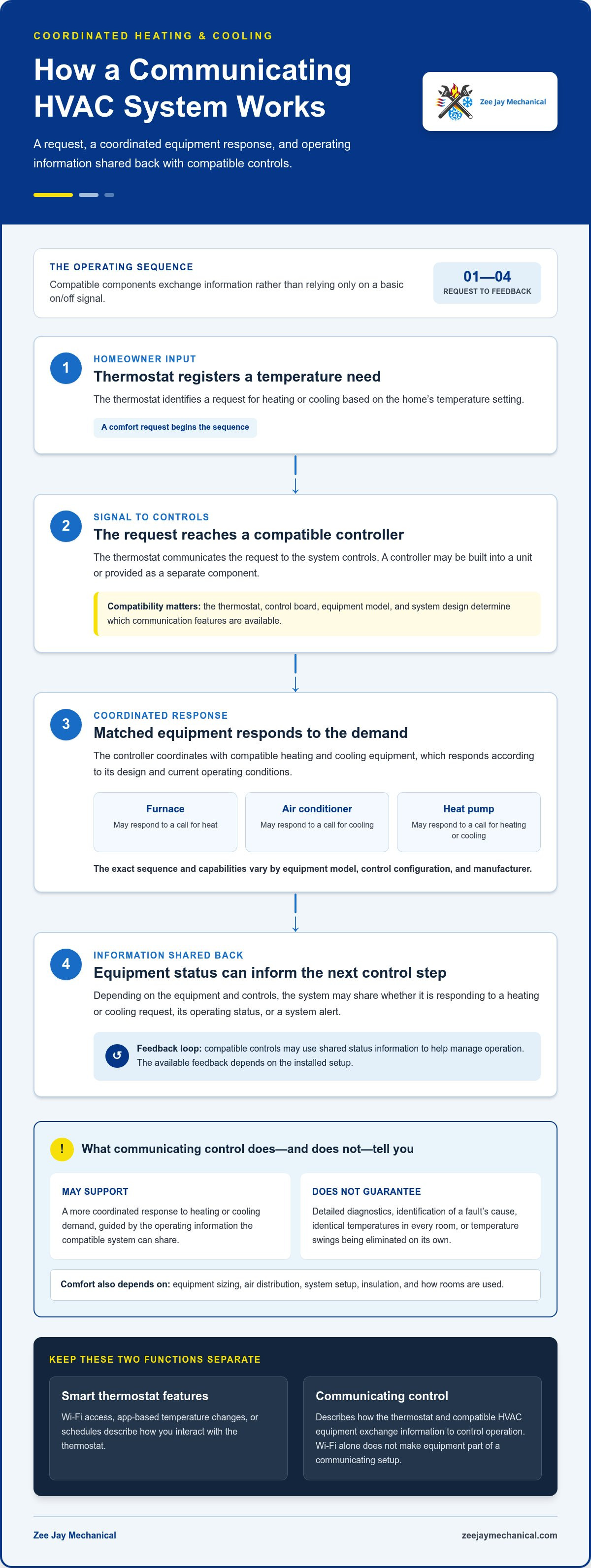
A compatible thermostat can send a request to the system’s controller, which coordinates with connected heating and cooling equipment. A furnace may respond to a call for heat; an air conditioner or heat pump may respond to a call for cooling. Depending on the setup, equipment can also share its operating status with the control, helping the system manage operation as a coordinated whole.
Not every home has the same components, and not every combination supports the same communication features. The equipment model, control board, thermostat, and system design all matter. When planning new installations or upgrades, specialists like Aircool advise assessing compatibility across the connected system rather than assuming it from one component’s label.
How is communicating control different from a smart thermostat?
A smart thermostat commonly adds features such as Wi-Fi access, app-based temperature changes, or schedules. Those features describe how you interact with the thermostat. Communication between the thermostat and HVAC equipment describes how the system controls operation. Wi-Fi alone doesn’t make a furnace, air conditioner, or heat pump part of a communicating setup.
For example, you might use an app to raise the temperature before returning home. The thermostat can send that request through basic on-and-off control or communicate with compatible equipment that shares operating information. The app experience may look similar, but the equipment’s response depends on the controls and components installed. Keeping these functions separate makes comparisons clearer and helps align your comfort goals with the equipment and controls.
How Does a Communicating HVAC System Coordinate Heating and Cooling?
A communicating system coordinates a heating or cooling request through a sequence of signals and responses. The thermostat registers that the home needs a temperature change, then sends that request to compatible equipment controls. The furnace, air conditioner, or heat pump responds according to its design and current operating conditions. It can then share status information with the control, which may use that feedback to manage the next step.
Rather than simply switching equipment on or off, communicating control can coordinate how compatible components respond to the home’s heating or cooling demand. The exact sequence varies by equipment model, control configuration, and manufacturer. A communicating control doesn’t give every system the same capabilities.
What information can compatible equipment share?
Depending on the equipment and controls, shared information may include whether the system is responding to a heating or cooling request, its operating status, or a system alert. This gives compatible controls a clearer picture of what the equipment is doing and may help coordinate operation. It doesn’t mean every setup provides detailed diagnostics or identifies the cause of a fault.
For homeowners, the practical point is that control decisions can draw on more than the temperature setting alone. The system may be able to respond in a way that reflects demand and available operating information. Check the equipment documentation and installed configuration to understand specific functions rather than assuming them from the word “communicating.”
How can coordination affect comfort during Edmonton winters?
During Edmonton’s extended heating season, consistent indoor comfort matters as outdoor conditions and household routines change. Compatible controls may adjust the system’s response to a heating request based on demand and system status. That can support more considered operation than a basic call for heat, but it doesn’t guarantee every room will feel the same or eliminate temperature swings on its own.
Comfort also depends on equipment sizing, how heated air moves through the home, system setup, insulation, and room use. If one area stays chilly, communicating controls alone may not address the cause. Consider equipment coordination alongside the home’s air distribution. Zee Jay Mechanical’s Edmonton heating and air conditioning guide offers more context on planning for local heating and cooling needs.
To see how coordination could fit your home, start with the equipment and controls already in place, then connect your comfort concerns to the system’s capabilities. Zee Jay Mechanical provides HVAC planning and installation. Learn about Zee Jay Mechanical’s HVAC services as you consider your options.
Communicating vs. Conventional HVAC: Which Benefits Matter in Practice?
A communicating setup can coordinate compatible equipment using shared operating information. A conventional system generally relies on simpler control signals. The difference may matter when connected heating and cooling equipment needs to respond together, but more communication alone doesn’t guarantee lower energy bills or better comfort. Results depend on the equipment, installation, settings, and household use.
Use this comparison to focus on practical differences rather than the label alone:
| Area | Communicating system | Conventional system |
|---|---|---|
| Coordination | Compatible controls and equipment can exchange operating information. | Controls typically send basic calls for heating or cooling. |
| Comfort control | May support a response tailored to demand and equipment capabilities. | Operation follows the control signals and available equipment functions. |
| Troubleshooting visibility | May share operating status or system alerts, depending on configuration. | May provide less status information through the thermostat. |
| Setup requirements | Equipment and controls need to be compatible with the system’s communication approach. | Uses control arrangements supported by the installed equipment. |
The table describes typical distinctions, not a performance guarantee. Claims about energy savings or other quantified results should be supported by evidence that applies to the specific equipment and conditions. Broad marketing statements may not reflect your home, climate, settings, or routines. The benefits of a communicating HVAC system are best judged by what the matched equipment can actually do and whether those functions address a comfort or operating need.
When can communicating controls make a noticeable difference?
Coordination may be useful in a home with compatible multi-component equipment or varied heating and cooling demands. For instance, when a furnace and air conditioner share controls, system communication may help those components respond in an organized way to the current request. The result depends on the system design. Don’t treat communication as a promise of lower bills, more even temperatures, or a fix for issues unrelated to controls.
What are the trade-offs of a communicating system?
Compatibility is a key consideration. A thermostat and equipment that use different communication approaches may not support the same coordinated functions, and changing one part can affect how the rest of the setup operates. Setup, service, and replacement options also depend on system design. The practical takeaway is to understand the full equipment and control arrangement before choosing.
For a sound comparison, separate documented capabilities from assumptions. Review what the controls and equipment are designed to communicate, what functions that enables, and whether those functions address your home’s actual needs. If conventional controls already deliver dependable comfort, added coordination may offer little practical value. If compatible equipment can address a specific concern, the added control may be worthwhile.
How to Assess Compatibility and Choose a Communicating HVAC Setup
Start with what’s already in your home. A modern-looking thermostat doesn’t tell you whether it can coordinate with the furnace, air conditioner, heat pump, or control board. The useful question is whether the full combination supports the functions you want and suits your comfort needs.
Before planning a change, make a short inventory:
- Equipment: Note the furnace, air conditioner, or heat pump make and model, if you can find it on an exterior label or in your paperwork.
- Thermostat and controls: Record the thermostat model and any control-board or system information in manuals or installation documents.
- System age: Estimate the equipment’s age and note previous replacements or upgrades.
- Comfort concerns: Write down rooms that feel too warm or cool, when the issue occurs, and whether it happens during heating, cooling, or both.
- Ductwork: Note known airflow concerns or areas that seem poorly served by the existing layout.
This information gives an HVAC assessment a practical starting point. Don’t open equipment panels or alter wiring to find model details. Use the documentation you have and leave internal inspections to a qualified professional.
What should homeowners document before an assessment?
Be specific about patterns. For example, note whether an upstairs bedroom feels cool during an Edmonton cold snap or whether one room stays warm after the rest of the home reaches its set temperature. Record when it happens and what the system is doing. These observations can help distinguish a control concern from issues involving equipment, airflow, ductwork, or other home conditions.
Which installation and integration details affect the decision?
Compatibility across equipment, controls, and wiring affects which functions a system can support. Setup and commissioning matter too: components must be configured to operate together as intended. A professional assessment can review these requirements alongside the home’s equipment and comfort priorities, instead of treating a thermostat change as a complete system plan.
Edmonton’s extended heating season makes dependable heating an important planning consideration, but the local climate alone doesn’t mean a communicating setup is necessary. Existing ductwork matters as well. Its layout and condition can affect comfort distribution, and changing controls won’t automatically correct an airflow problem. If a furnace replacement is part of the plan, the furnace installation guide for Edmonton homes can help frame the broader decision.
For an existing system, address recurring performance problems before choosing new controls. A repair assessment can help determine whether the concern relates to equipment operation or another part of the setup. Zee Jay Mechanical’s Edmonton HVAC repair guide provides additional context for existing-system concerns.
The right choice depends on assessed equipment and project requirements. A full-system review can show whether the benefits of a communicating HVAC system address a real need in your home. Plan your HVAC system with Zee Jay Mechanical to align equipment, controls, and comfort priorities.
Plan a Communicating HVAC System with Zee Jay Mechanical
A communicating system needs more than a compatible thermostat. The equipment, controls, wiring, and installation plan must work together and suit the home’s comfort needs. Zee Jay Mechanical provides residential furnace and air-conditioning installation, along with mechanical and electrical engineering services that include automation and system planning. This work can keep recommendations grounded in the actual equipment and project requirements.
A project-specific assessment can consider how your current setup operates, where comfort falls short, and whether coordinated controls could address those concerns. The goal isn’t to add technology for its own sake. It’s to match the intended system functions to compatible equipment and a clear installation plan, without assuming a particular communication protocol or promising a specific bill reduction.
What does a project-specific HVAC assessment address?
An assessment connects household comfort priorities to existing equipment, controls, and system configuration. For example, a homeowner may want more responsive heating in a frequently used room. The review can also consider the furnace, ductwork, thermostat, and other relevant components. Recommendations should reflect the complete installation and the capabilities of compatible equipment, not just the features of a replacement control.
Commercial building automation is a separate planning context. It may involve coordinating HVAC with broader building systems, whereas a residential thermostat generally focuses on home heating and cooling. Zee Jay Mechanical’s automation and engineering services support project planning while keeping the proposed system specific to the building and its needs.
What happens after the system plan is set?
Once the equipment and control approach are defined, installation, control setup, and commissioning can be treated as connected project stages. Installation brings the selected components together; setup configures the controls for that system; commissioning checks that the installed arrangement operates as intended. The exact work depends on the equipment and project scope.
Clear operating instructions matter, too. Homeowners should understand how to adjust everyday settings, what the controls display, and which system behaviours are normal. A practical handover makes it easier to use the controls confidently and recognize when something seems different from usual.
Choosing among the benefits of a communicating HVAC system starts with your home, not a feature list. Zee Jay Mechanical can assess your needs and plan compatible equipment and controls as part of residential HVAC installation. If you’re considering a new system or an integration plan, contact the Zee Jay Mechanical team to arrange a project discussion.
Make Your Next HVAC Decision with Confidence
The right time to think about controls is when you’re planning a system change or looking for a practical way to address a comfort concern. Before that conversation, note what you want the system to do differently and gather the equipment information you already have. A clear starting point keeps the discussion focused on your home rather than features you may never use.
The benefits of a communicating HVAC system depend on whether coordinated operation addresses a real need and whether your equipment can support it. You don’t have to decide by comparing thermostat features alone. A project discussion can connect your comfort priorities to an installation plan that fits your system.
For a next step, talk with Zee Jay Mechanical about your HVAC system plan. A well-considered plan can clarify the path forward and help you feel more confident about your home’s comfort.
Frequently Asked Questions
Is a communicating HVAC system worth it?
It can be worthwhile if coordinated operation or added system visibility would address a specific concern in your home. The benefits of a communicating HVAC system depend on the equipment, controls, installation, and how your household uses heating and cooling. If you’re planning a furnace replacement, for example, consider whether the proposed controls offer a function you’ll actually use. A system isn’t automatically more comfortable or less costly to operate just because it communicates.
Can you use a communicating thermostat with any furnace?
No. A communicating thermostat needs compatible equipment and controls to use communication features. Before replacing a thermostat, find the furnace model and the thermostat documentation, along with details of any other connected equipment. If you’re unsure what’s installed, an HVAC assessment can review the complete setup without requiring you to open panels or handle wiring. This helps avoid choosing a control that doesn’t support the functions you expect.
Does a communicating HVAC system need Wi-Fi?
No. Wi-Fi and communication between HVAC components are separate capabilities. A thermostat might connect to your home network for app access or remote adjustments without communicating operating information with the furnace or air conditioner. Conversely, system communication doesn’t necessarily mean you can control it from an app. Review the documentation for each function you care about, such as scheduling, remote access, and equipment communication.
Can a communicating HVAC system work with equipment from different manufacturers?
Sometimes, but it depends on the specific equipment and control configuration. Different components may not use compatible communication methods, or they may work together without supporting every available function. For example, a replacement thermostat could operate basic heating without enabling more advanced system communication. Reviewing model documentation and assessing the installed combination can clarify whether integration is practical or whether a matched equipment setup better suits the project.
Will a communicating HVAC system lower energy bills?
Not necessarily. Coordinated controls may affect how compatible equipment operates, but energy use also reflects equipment efficiency, sizing, installation, maintenance, settings, outdoor conditions, and household routines. A thermostat set to a higher temperature during a cold spell, for instance, can affect heating demand regardless of the control type. Treat savings claims cautiously unless evidence applies to the specific system and conditions. Focus first on whether the system addresses a real comfort or control need.
Can a communicating HVAC system identify a problem before the equipment stops working?
Some systems share status information or alerts, but diagnostic capabilities differ. An alert may point to an operating issue, but it doesn’t guarantee advance warning or identify every fault. If your system displays a warning, note the message and when it appeared, then refer to the equipment instructions. If performance changes or the alert persists, arranging HVAC service can help determine what’s happening and whether repair is needed.
Is a communicating HVAC system useful in Edmonton’s climate?
It may be useful if compatible controls support your home’s heating needs, but Edmonton’s climate alone doesn’t make it the right choice. Consider how the system performs during your household’s winter routines, whether certain rooms are regularly uncomfortable, and whether your equipment can support the intended controls. An assessment in Edmonton can put these priorities in context and help you decide whether system coordination offers practical value for your home.
Disclaimer
The content of this article is for the general information purpose. Please contact us if you have any questions.