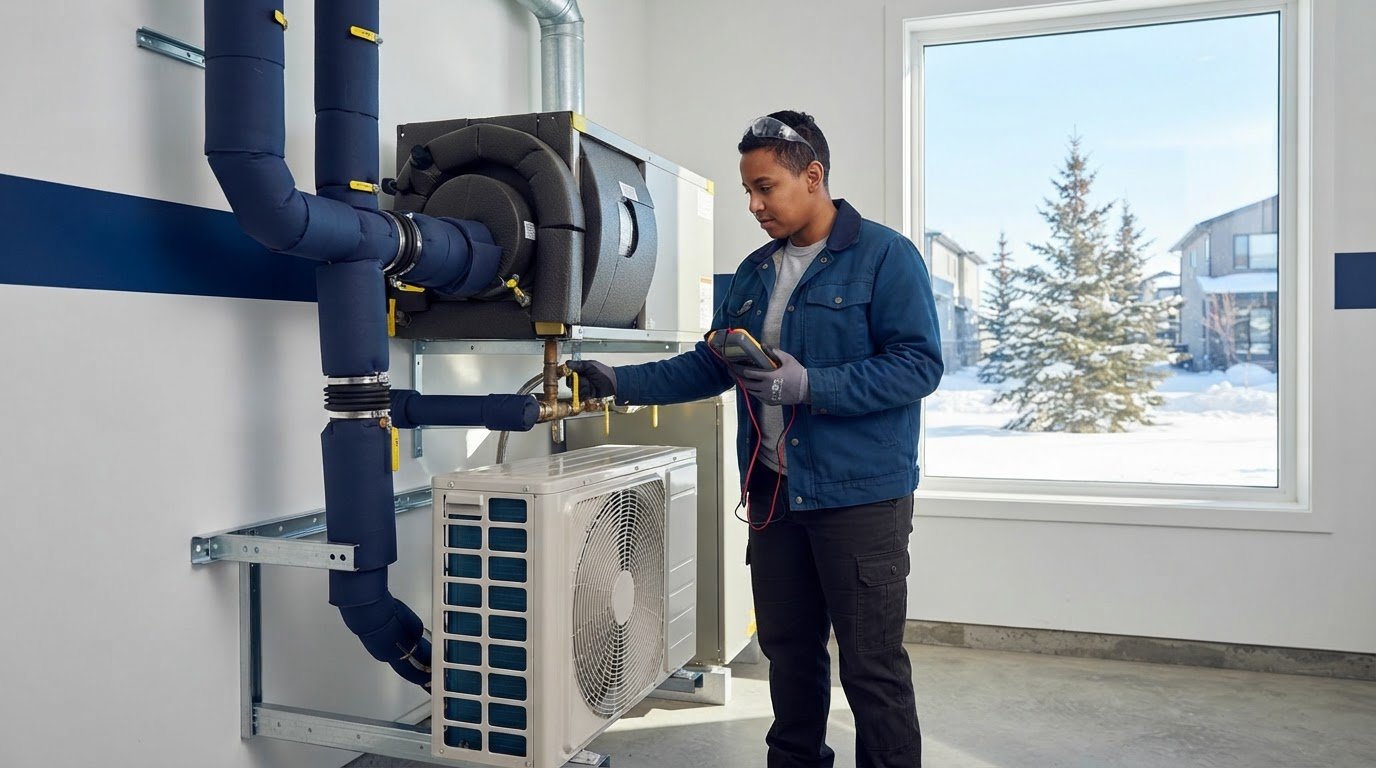
Quiet HVAC operation starts with well-maintained equipment, properly secured components, and ductwork that isn’t leaking or vibrating. HVAC noise reduction solutions for homes in Edmonton can also include quieter equipment features, vibration control, a professional assessment, or a system upgrade when repairs won’t address the cause.
Rattling, whistling, humming, or a sudden change in sound can disrupt a home and leave you unsure what needs attention. The right fix depends on the source, so start by identifying where the noise comes from rather than trying to mask it.
This guide explains how maintenance can help, which sound-reducing features to consider in HVAC equipment, and what a professional assessment can reveal. You’ll also learn when an upgrade may make sense and how to approach the issue with practical steps for Edmonton homes.
Key Takeaways
- Use routine maintenance to keep HVAC components in good working order and catch loose or worn parts that may contribute to noise.
- Look for sound-reducing features such as insulated components and vibration-isolated mounts when comparing modern equipment.
- Pay attention to when a sound occurs and where it seems loudest; those clues can help identify whether the source is the unit, ductwork, or vibration.
- Leaky or damaged ducts can create whistling or rumbling, while a unit that isn’t level or securely mounted may transmit vibration through the home.
- Consider an upgrade when persistent noise stems from the system itself, and compare operating features alongside suitability for your home.
Routine HVAC maintenance to reduce noise
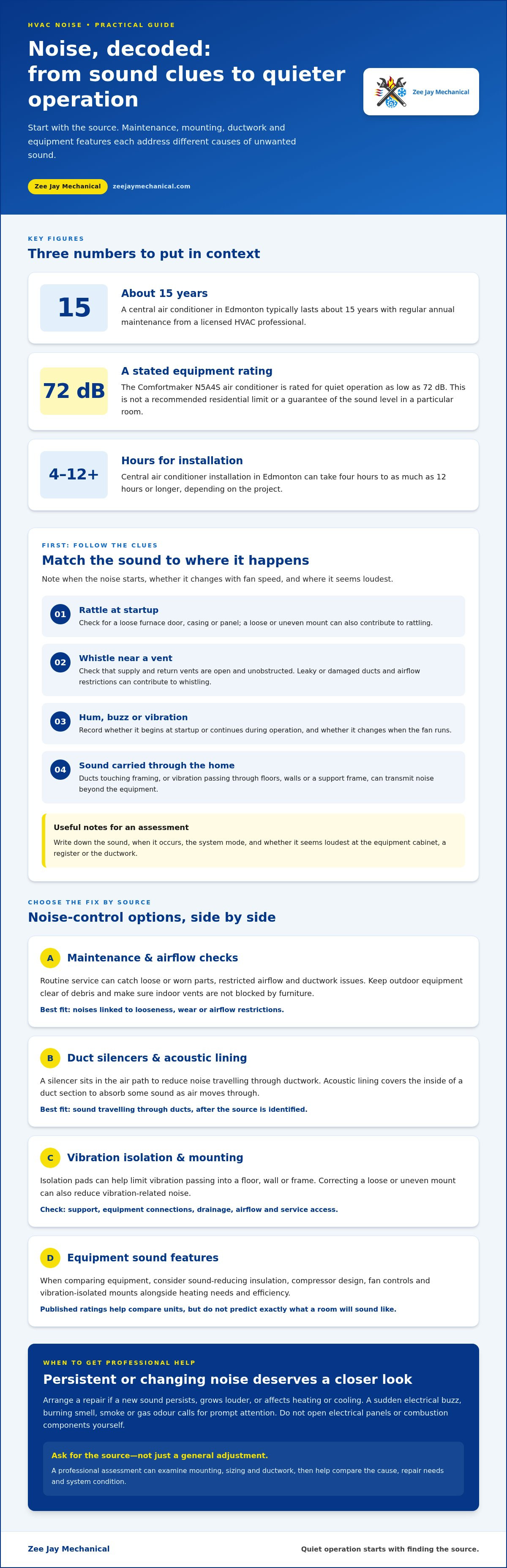
Start by noting the sound and when it occurs. A rattle during furnace startup points to a different area than a whistle from an air-conditioning vent. Record whether the noise continues, changes with fan speed, or comes from the equipment cabinet, a register, or the ductwork. These details help an HVAC technician focus the inspection instead of treating every sound as the same problem.
For Edmonton homes, noise concerns depend on the sound’s source and circumstances. Don’t assume there is one HVAC-specific decibel limit. Building requirements relate to how equipment is installed, while an assessment can examine mounting, sizing, and ductwork. Record when and where the sound occurs so you can describe it clearly.
Edmonton’s cold climate means furnaces may run for extended periods in winter, making changes in sound easier to notice. Keep outdoor equipment clear of debris and check that furniture isn’t blocking indoor vents. Seasonal checks can also reveal loose panels or airflow restrictions before the summer air-conditioning cycle begins.
- Inspect visible panels: Look for a loose furnace door or air-conditioning casing, and note any new rattle.
- Check airflow: Make sure supply and return vents are open, unobstructed, and not producing a whistle.
- Listen to the cycle: Record whether humming, buzzing, or vibration starts at startup or continues during operation.
- Keep a maintenance record: Note the date, system mode, and sound location for the next tune-up.
Routine maintenance helps keep components in good working order, which can reduce noise caused by looseness or restricted airflow. A central air conditioner in Edmonton typically lasts about 15 years with regular annual maintenance from a licensed HVAC professional. Annual service also gives contractors a chance to inspect the air-conditioning system before summer use.
A maintenance visit should include inspection of accessible components, airflow, electrical connections, and ductwork. Ask the technician to identify the source of any noise, not just make a general adjustment. For example, a hum that changes when the fan runs may need a different repair from a loose panel that rattles at startup.
Arrange a repair if a new sound persists, grows louder, or affects heating or cooling. A sudden electrical buzz, burning smell, smoke, or gas odour calls for prompt attention. Don’t open electrical panels or combustion components yourself. Consider replacement if problems continue despite suitable repairs or the system no longer provides reliable comfort. A professional assessment can compare the cause, repair needs, and system condition.
If replacement follows, compare installation scope as well as equipment. Central air conditioner installation in Edmonton can take four hours to as much as 12 hours or longer, depending on the project.
These figures describe different locations and pricing contexts, so confirm what equipment and work a quote includes before comparing it with a listed model price.
Noise-reduction features in modern HVAC units
Modern HVAC equipment can manage sound through insulation, compressor design, fan controls, and vibration isolation. When considering an installation, compare these features alongside heating needs and efficiency rather than treating them as promises of silence.
Duct Silencers and Acoustic Treatments
A duct silencer or sound attenuator sits in the air path and reduces noise travelling through ductwork. Acoustic lining, by contrast, covers the inside of a duct section to absorb some sound as air moves through. The right option depends on whether the noise travels through the ducts or comes from the furnace or fan. Duct shape and airflow matter, too.
Identify the source before adding sound treatment. A whistle near a register may come from airflow or a restriction, while fan noise can travel along connected ducts. A silencer installed without diagnosing the cause may not resolve the sound. In a ductless system, there’s no central duct run to line, so attention shifts to the indoor heads, outdoor unit, and mounting.
Vibration Isolation and Mounting Changes
Isolation pads sit between equipment and its support to help limit vibration passing into floors, walls, or a mounting frame. Correcting a loose or uneven mount can also reduce rattles and structure-borne noise. The installer should consider the unit’s weight, support surface, and connections. Rigid pipes or ducts touching framing can still carry vibration around the pad.
For outdoor air-conditioning equipment, check whether vibration seems strongest at the base or where refrigerant lines enter the building. Alberta winter conditions make secure, stable support especially relevant, but a pad must not obstruct drainage or airflow. Mounting changes should preserve the unit’s clearances and service access.
Noise Levels and Recommended Limits
Decibel ratings offer a comparison between units, but they don’t describe exactly what a homeowner will hear indoors. The Comfortmaker N5A4S air conditioner is rated for quiet operation as low as 72 dB. Treat that as the equipment’s stated rating, not a recommended residential limit or a guarantee of the sound level at a particular room.
Compare published ratings under similar conditions, then consider the equipment’s location relative to bedrooms, living areas, and property boundaries. A furnace in a utility room can sound different from outdoor equipment, even when the ratings seem comparable. Ask an HVAC professional to assess location, mounting, and sound paths if readings or operating noise are a concern.
Some units have sound-reducing insulation around internal components, while compressor blankets can muffle compressor noise. Isolated compressor and fan mounts limit vibration transfer. These features address different sound sources, so note whether the disturbance is a steady hum, fan rush, or cabinet rattle before comparing models.
Variable-speed fans can adjust to maintain a consistent temperature while running at lower speeds. This can change the character of airflow noise compared with a fan that runs at one speed. When selecting equipment, compare controls, sound treatments, and heating or cooling requirements together. A quieter setting won’t compensate for poorly matched equipment or obstructed airflow.
For homeowners planning air-conditioning installation, discussing equipment placement, sound ratings, and vibration control helps make noise part of the installation decision.
Professional noise assessment
To diagnose a noisy furnace, air conditioner, or ductwork, note where the sound starts and what the system is doing. A technician can compare it with the heating or cooling cycle, inspect accessible components, and trace whether vibration travels through ducts or nearby framing. For homeowners searching “HVAC noise reduction solutions for homes Edmonton,” an assessment helps connect the noise to its source.
Before the visit, make a brief sound log. Record the room, time, thermostat setting, and whether the noise starts at startup, continues steadily, or stops when the system shuts down. For example, a rattle near a supply register differs from a buzz beside the furnace cabinet. These details make the problem easier to describe.
During an assessment, technicians listen at the equipment and in the rooms where the sound is strongest. They can inspect panels, fan assemblies, accessible duct connections, and mounting points. This helps distinguish mechanical noise from airflow noise or vibration carried through the building. The findings guide which HVAC noise reduction solutions Edmonton households may need.
- Furnace: Note whether a bang, hum, or rattle occurs during startup, steady heating, or shutdown.
- Air conditioner: Record whether the sound comes from the outdoor unit, indoor air handler, or a nearby vent during cooling.
- Ductwork: Identify registers that whistle, thump, or vibrate, and note whether the sound changes when airflow changes.
- Thermostat: Write down the setting and system mode when the noise occurs, without removing covers or adjusting wiring.
Noise may seem to come from HVAC equipment when another household system is operating. A hot water tank can rumble during heating, while plumbing can knock as water flows. Note whether the sound coincides with hot-water use or a heating cycle. That timing gives technicians a useful clue before inspecting either system.
A professional assessment should connect the sound to a likely source and explain the next diagnostic step. For example, a whistle may lead to an airflow and duct inspection, while steady vibration can prompt checks of mounts and contact points. The recommended response depends on the inspection findings, not simply on how loud the sound seems.
Share your sound log and identify the loudest indoor location. If the noise changes after a filter replacement, thermostat adjustment, or seasonal switch from heating to cooling, include that detail. Don’t open electrical panels, reach into equipment, or remove furnace components to reproduce a sound. A clear description helps focus the assessment and avoids unsafe handling.
Upgrading to a quieter HVAC system
An upgrade may make sense when recurring noise comes from the equipment itself rather than a loose panel or duct connection. In Edmonton, compare sound features alongside heating and cooling capacity, equipment condition, and local climate demands. Replacing a system solely because it sounds loud can overlook a fixable installation or airflow issue.
Start by identifying the system type and sound pattern. A furnace may produce fan or cabinet noise during heating, while outdoor air-conditioning equipment may vibrate near its base. Share these observations during an assessment. The technician can then consider whether repair, adjustment, or replacement best addresses the source.
For homeowners researching HVAC noise reduction solutions for homes Edmonton, a quieter system is one option, but proper sizing matters too. An HVAC professional should perform a load calculation to determine the appropriate air-conditioner size for the home. Existing ductwork, insulation, window exposure, and the home’s layout all inform that calculation.
Ask how a proposed unit manages sound during normal operation. Variable-speed fans can adjust to maintain a consistent temperature while running at lower speeds. Some modern units also use sound-reducing insulation, compressor blankets, or isolated fan and compressor mounts. These features address different sound paths, so match the equipment design to the noise you’ve noticed.
- Compare equipment: Review published sound ratings under comparable conditions, plus fan and compressor features.
- Review placement: Consider how an outdoor unit’s location and mounting relate to bedrooms, patios, and walls.
- Check system fit: Include ductwork condition, airflow, and heating or cooling requirements in the comparison.
- Discuss operation: Ask how fan settings and controls affect sound during regular use.
Consider energy efficiency as part of the same decision. Compare the proposed system’s efficiency information and expected operating pattern with your existing equipment. Potential savings depend on the system being replaced, its condition, usage, and the home’s heating and cooling needs. A quieter model isn’t automatically the most efficient choice, and an efficiency rating alone doesn’t describe indoor comfort.
Edmonton’s winter climate also affects equipment selection. A heat pump must suit the home’s heating requirements and local operating conditions, while a furnace upgrade should account for the existing distribution system. When comparing HVAC noise reduction solutions for homes Edmonton, ask how the equipment connects with current ductwork and controls.
Use the appointment to review the noise source, proposed equipment features, sizing method, installation details, and expected operation. If a repair can address the diagnosed cause, replacement may not be necessary. If the equipment itself is the source, compare suitable options by comfort, sound, efficiency, and system compatibility.
What are the common causes of HVAC noise in Edmonton homes?
HVAC sounds can point to particular parts of the system. A whistle from a supply register may indicate air moving through a leak or restriction, while a rumble can come from damaged or poorly connected ductwork. A clank near the furnace, steady fan hum, and vibration at outdoor equipment each suggest different things to inspect. Location and timing help narrow the cause.
Leaky or damaged ductwork can create whistling or rumbling, and sealing gaps may help eliminate those sounds. Listen near registers and along accessible duct sections while the system runs. If one room whistles while other vents sound quiet, note the difference. Don’t tape over vents or close several registers to silence a noise, since changing airflow can affect system operation.
Installation issues can also carry sound through a home. Proper HVAC installation includes ensuring the unit is level, securely mounted, and correctly sized for the house. An uneven base may contribute to vibration, and a loose mount can transmit it into nearby flooring or framing. If a sound seems strongest beside a wall, record the location for the technician rather than moving or adjusting the equipment yourself.
- Whistling: Check whether the sound comes from a register or duct connection, and note if it changes with airflow.
- Rumbling: Listen near accessible ductwork for a loose connection or damaged section.
- Rattling: Note whether the noise starts with the furnace or air conditioner, which can help identify a panel or component needing inspection.
- Vibration: Mark whether the strongest sensation is at the equipment base, a nearby floor, or a wall.
Outdoor equipment may sound different during an Edmonton winter than during summer cooling. Snow, ice, or debris around a unit can obstruct airflow or create contact noise. Keep the area around the equipment clear without striking, scraping, or opening the unit. If a new sound persists after visible debris is cleared, note when it happens and arrange an inspection.
A sound that occurs only at startup differs from one that continues throughout the heating or cooling cycle. Write down the operating mode, thermostat setting, room, and sound pattern. For example, a brief startup rattle may call for a different inspection than a constant blower hum. These clues help distinguish airflow, mounting, and equipment issues.
If inspection points to a faulty air conditioner rather than a duct or mounting issue, discuss whether repair or replacement fits the system’s condition. For an installation option, explore air conditioner installation in Edmonton and surrounding areas.
Zee Jay Mechanical: Furnace Installation
Zee Jay Mechanical provides furnace repair and installation when equipment noise points to a heating-system issue or replacement need. If an assessment identifies a repairable fault, furnace repair can address the source. If an older system needs replacement, furnace installation is the next step to discuss. For cooling equipment, the company also offers air-conditioning repair and installation in Edmonton.
Before arranging service, note the sound, where it occurs, and whether it starts during heating or cooling. Share those details to give the technician a clear starting point. The right solution depends on the system and the cause of the noise, not simply on how loud it seems.
Contact Zee Jay Mechanical to discuss the noise and the right HVAC service for your Edmonton home.
Make quiet operation part of your next HVAC decision
Comfort isn’t only about reaching the temperature on your thermostat. It also means being able to work, rest, and talk at home without distracting mechanical noise. Treat sound as a practical requirement when planning future HVAC work, alongside system fit, indoor comfort, and how equipment will operate through Edmonton’s changing seasons.
For homeowners weighing HVAC noise reduction solutions in Edmonton, the next step is to connect the noise concern with the work the system may need. Zee Jay Mechanical offers furnace repair and installation, as well as air-conditioning installation in Edmonton. Sharing what you hear and when it happens can help focus the conversation on the right service for your home.
Choose a clear path forward, whether that means addressing an existing furnace issue or planning new cooling equipment. Contact Zee Jay Mechanical today to discuss your home’s HVAC needs and take the next step toward a quieter, more comfortable space.
Frequently Asked Questions
What are the best DIY ways to reduce HVAC noise at home?
Start with low-risk changes around the room: move loose objects away from vents, secure rattling vent covers, and add a rug or soft furnishings where sound carries across hard surfaces. Sound-absorbing curtains may help reduce noise entering through a nearby window. Keep materials clear of the furnace, air conditioner, and vents, and don’t build an enclosure around equipment. If noise persists or changes suddenly, arrange a professional inspection.
What Edmonton noise bylaws or Alberta building requirements apply to residential HVAC noise?
Don’t assume there is one HVAC-specific decibel limit. Building requirements relate to how equipment is installed, and an assessment can examine mounting, sizing, and ductwork.
Disclaimer
The content of this article is for the general information purpose. Please contact us if you have any questions.