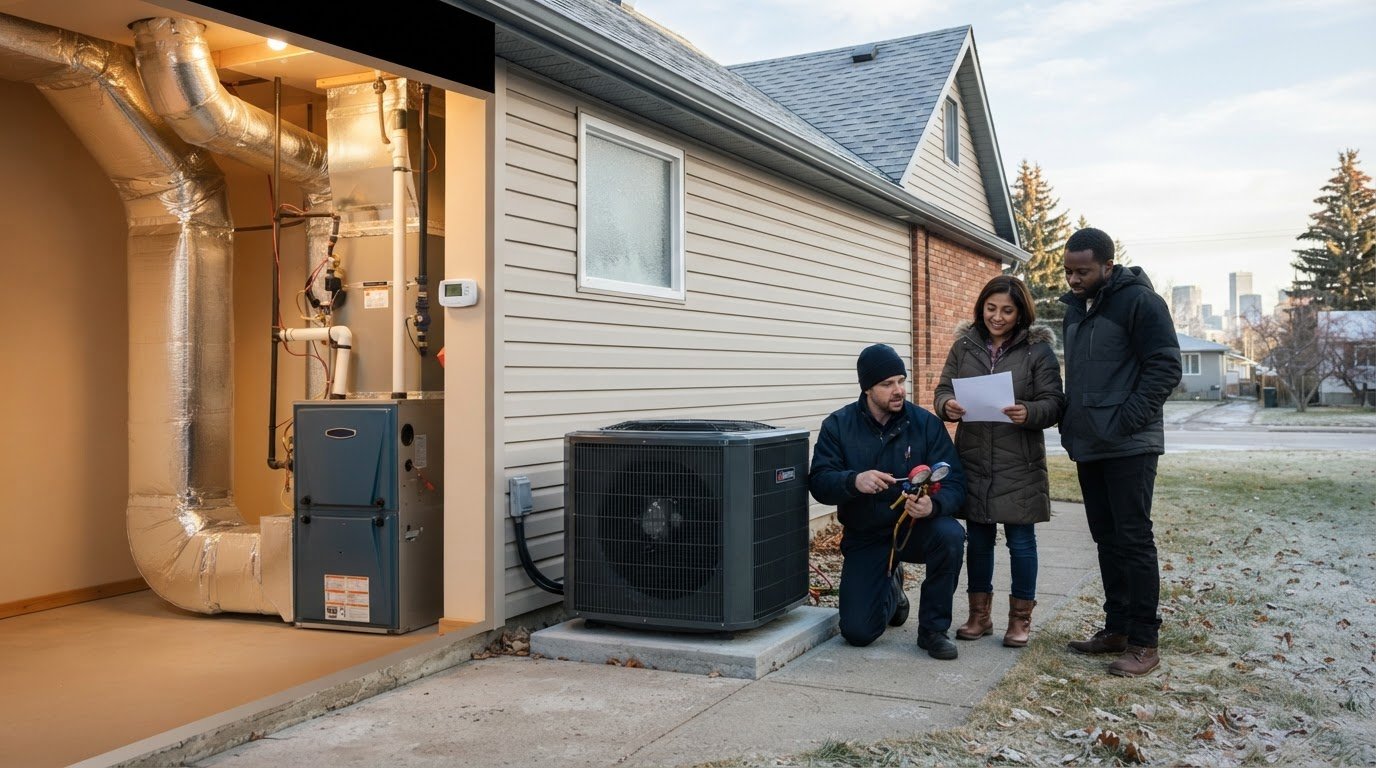
A working heating system is a landlord duty in Alberta. Section 16 of Alberta’s Residential Tenancies Act requires landlords to keep rental premises in good repair, including working heat, and the Minimum Housing and Health Standards require adequate heating and proper ventilation. These are central landlord HVAC responsibilities under Alberta’s tenant act, while tenants are responsible for repair costs when they or their guests or pets cause damage.
When a furnace or ventilation system fails, it can be stressful to work out who should arrange repairs and how quickly they need to happen. The tenancy agreement matters, but Alberta’s legal requirements apply too.
This article explains what Alberta law says about heating and ventilation, which responsibilities may fall to tenants, and what can happen when repairs are delayed or disputed. It also explains how to distinguish routine maintenance from damage caused during the tenancy, so you can identify a useful next step.
Key Takeaways
- Alberta landlords are responsible for keeping rental heating and ventilation systems in safe, working condition under housing requirements.
- Tenants may be responsible for repair costs when damage is caused by them, their guests, or their pets.
- Keep a clear record of repair requests and responses to help explain the issue if a dispute arises.
- Learn what options are available when a repair is delayed, including formal dispute resolution or a court claim.
What If the Landlord Does Not Make Repairs?
Alberta’s Residential Tenancies Act requires landlords to keep rental premises in good repair and meet minimum housing standards. A heating failure can affect whether a home meets those standards, while responsibility for repair costs depends partly on what caused the damage.
Heating and Ventilation Maintenance
Landlord maintenance means keeping supplied heating and ventilation systems in working order. Section 16 of Alberta’s Residential Tenancies Act requires landlords to keep rental premises in good repair, and the Minimum Housing and Health Standards require adequate heating and proper ventilation. These obligations matter because a faulty furnace or ventilation system can affect comfort, air quality, and safe use of the rental property. Professional heating and boiler contractors like Blueflame Boilers Ltd emphasize that regular preventative maintenance and servicing help keep heating systems reliable and safe. Tenants should report a malfunction promptly and describe what stopped working.
Habitable Premises and Heating Duties
Habitable premises are rental homes kept in a safe condition that meets Alberta’s minimum housing standards. Landlords must provide habitable premises at the start of and throughout the tenancy, including working heat. The Residential Tenancies Act does not generally require landlords to install air conditioning. If air conditioning is included with the rental, repair obligations depend on the agreement and the condition of the equipment. These distinctions help tenants identify whether a problem concerns a required housing standard or an included feature.
Reporting Issues and HVAC Repair Costs
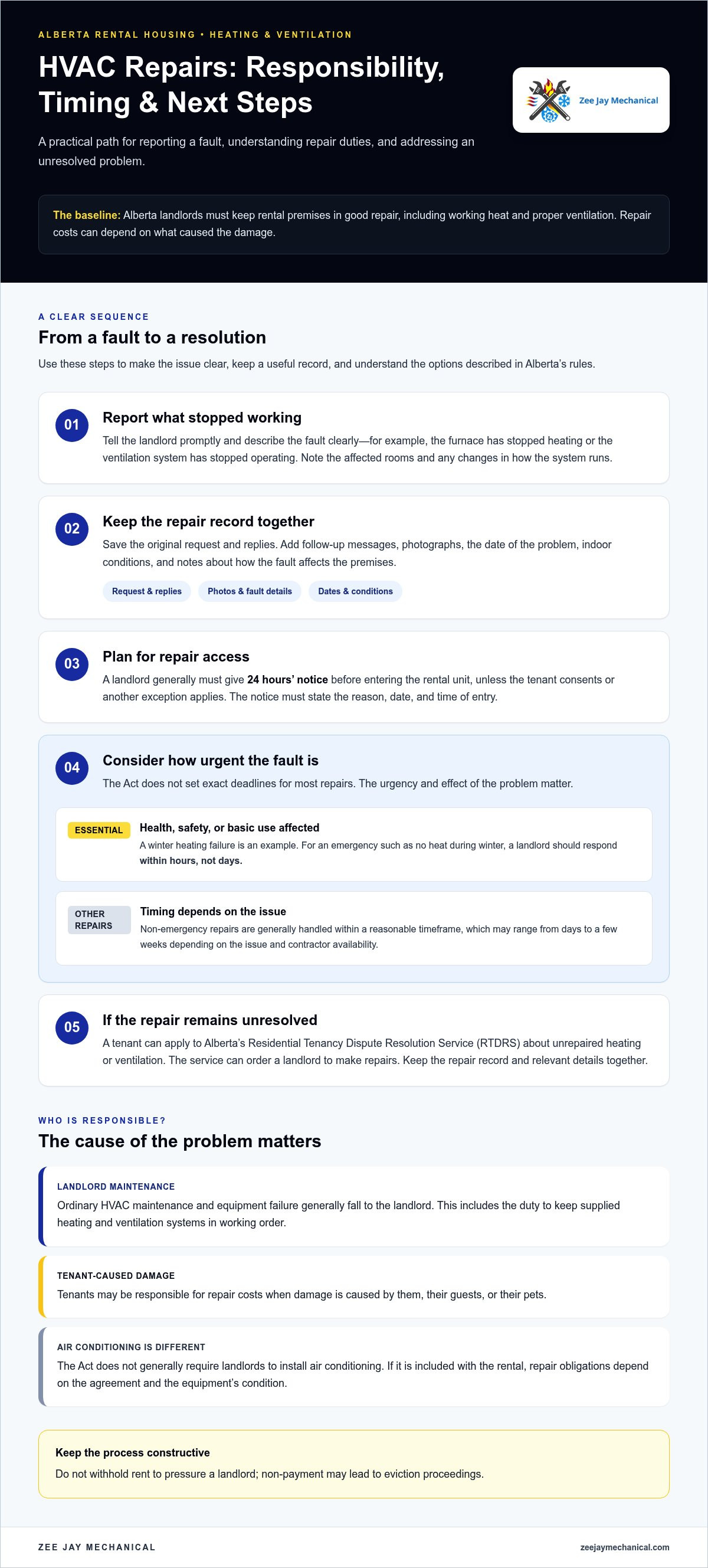
Tenants should report repair issues promptly, describe the fault, and keep copies of messages and replies. For example, note whether the furnace has stopped heating or the ventilation system has stopped operating. Landlords are generally responsible for ordinary HVAC maintenance and equipment failure. Tenants may be responsible for repair costs if they, their guests, or pets cause damage. The same cause-based distinction can apply to replacement: ordinary equipment failure falls under landlord maintenance, while tenant-caused damage may leave the tenant responsible. If the landlord does not address the request, tenants can apply to Alberta’s Residential Tenancy Dispute Resolution Service, which can order repairs. Don’t withhold rent to pressure a landlord, as non-payment may lead to eviction proceedings.
Landlord responsibilities under Alberta’s Residential Tenancies Act
Alberta’s Residential Tenancies Act sets minimum standards for residential landlord and tenant rights and responsibilities. Its requirements apply even when the rental agreement doesn’t repeat them. For HVAC, the key obligation is to maintain the property to meet health, safety, and housing standards, including working heat and proper ventilation. The Act doesn’t set exact deadlines for most repairs, so the urgency and effect of the problem matter.
Duct cleaning is a separate issue. The Residential Tenancies Act doesn’t specifically assign routine duct cleaning to landlords or tenants. A rental agreement may address cleaning, shared costs, or circumstances that make a tenant responsible. If a tenant moves into a rental with dirty ducts or air-quality concerns, the landlord is responsible for addressing the pre-existing condition. Tenant actions that create a need for cleaning, such as smoking against lease terms, may affect who pays.
For a residential tenancy dispute about unrepaired heating or ventilation, tenants can apply to Alberta’s Residential Tenancy Dispute Resolution Service (RTDRS). The service can order a landlord to make repairs. Keep the repair request, the landlord’s response, and relevant details about the fault together. These records help show what needs attention and whether the landlord has acted. The Residential Tenancies Act Handbook also explains landlord and tenant obligations under the Act and related regulations.
Access for repairs has rules too. In Alberta, a landlord must generally give a tenant 24 hours’ notice before entering the rental unit, unless the tenant consents or another exception applies. Notice must state the reason for entry and its date and time. This helps tenants plan for a technician’s visit while allowing necessary maintenance to proceed. If the repair request concerns heating, describe the affected rooms and any changes in system operation, then keep the notice with the repair records.
Landlord and tenant repairs disputes
A repair dispute can arise when a landlord and tenant disagree about urgency, access, or responsibility for damage. Alberta provides formal options for resolving unresolved maintenance concerns.
Escalating Unresolved Repair Issues
Escalation means taking a documented repair disagreement to a formal resolution process. Keep the original request, follow-up messages, photographs, and notes about how the fault affects the premises. If the landlord hasn’t addressed the issue, a tenant can apply to Alberta’s Residential Tenancy Dispute Resolution Service (RTDRS), which can order repairs. Tenants may have options for seeking resolution when repair disputes remain unresolved. These options provide a structured way for landlords and tenants to present their positions.
Essential Repairs and Emergency Response
Essential repairs address problems affecting health, safety, or basic use of the rental, including a winter heating failure. Alberta’s Residential Tenancies Act requires landlords to maintain the premises, but it doesn’t set exact timelines for most repairs. For an emergency such as no heat during winter, a landlord should respond within hours, not days. Non-emergency repairs are generally handled within a reasonable timeframe, which may range from days to a few weeks depending on the issue and contractor availability; for instance, Calgary landlords often turn to licensed specialists like Prodigy Mechanical to resolve urgent heating system issues. Record the date, indoor conditions, and steps taken to report the fault.
Repair Access and HVAC Costs
Repair access rules let landlords arrange work while protecting a tenant’s privacy. In Alberta, landlords generally must give 24 hours’ notice before entering, unless the tenant consents or an exception applies. Entry must usually occur between 8:00 a.m. and 8:00 p.m., except in an emergency. A tenant may be charged for HVAC damage caused by the tenant, their guests, or pets; ordinary maintenance is the landlord’s responsibility. If damage is disputed, ask for an itemized explanation and keep related messages. Alberta landlords must provide an itemized list of security deposit deductions, including damage beyond normal wear and tear.
Landlord and tenant rights and responsibilities
Alberta’s Residential Tenancies Act sets minimum rights and responsibilities, even when a rental agreement says nothing about them. The agreement can still clarify additional duties, such as lawn care or snow removal. Landlords must make the rental unit available when the tenancy begins and maintain it to applicable housing standards. Tenants must pay rent and avoid damage beyond normal wear and tear. This division helps identify whether an HVAC concern is routine maintenance or damage caused during the tenancy.
Heating standards provide a practical reference point. Under Alberta’s Minimum Housing and Health Standards, a furnace must be able to heat all living spaces to 22 degrees Celsius. During very cold winter weather, a furnace must be able to maintain at least 16 degrees Celsius. These figures help tenants describe the problem clearly, such as a living room that remains cold while other rooms receive heat. Record affected rooms and temperatures when reporting the issue.
Tenants are responsible for repair costs when they, their guests, or their pets cause damage. A landlord can’t treat ordinary wear or routine maintenance as tenant-caused damage simply by adding a lease clause. Section 43 of the Residential Tenancies Act also limits a security deposit to one month’s rent. If deductions are disputed, request an itemized explanation and retain the tenancy agreement, inspection records, and repair correspondence.
Protect your rights by keeping rent current while a repair disagreement continues. Alberta tenants shouldn’t withhold rent to pressure a landlord; non-payment may lead to eviction proceedings. For unresolved issues, the Residential Tenancy Dispute Resolution Service offers a formal process for resolving tenancy disputes. A tenant can present the repair request, the landlord’s responses, and evidence of the effect on living conditions. Those records help distinguish a delayed repair from a disagreement about responsibility.
If a furnace fault needs professional attention, arrange furnace repair to address the mechanical issue while landlord and tenant resolve their respective obligations.
Zee Jay Mechanical: Furnace Installation
Zee Jay Mechanical provides furnace installation and repair for heating-system needs in Edmonton. If a furnace has failed or needs replacement, tenants should notify the landlord, who can arrange the work as part of maintaining the rental. Property owners can use professional HVAC services for the mechanical work, while landlord-tenant disagreements remain separate from the repair itself. Zee Jay Mechanical also provides air conditioning installation and repair in Edmonton. The right service depends on whether the equipment needs troubleshooting, repair, or replacement. Contact Zee Jay Mechanical to discuss furnace installation or repair for your property.
Move Forward With a Clear Repair Plan
Once a heating or cooling problem is identified, separate the tenancy issue from the mechanical work. Keep communication with the landlord focused on the repair, and describe the symptoms clearly so the required work can be assessed. Understanding landlord HVAC responsibilities under Alberta’s tenant act can help you discuss the issue calmly and keep the focus on a safe, comfortable home.
For property owners arranging HVAC work, Zee Jay Mechanical provides furnace installation, furnace repair, and air conditioning installation. The right service depends on the equipment and the problem. If you’re planning a furnace project or need professional help with heating or cooling equipment, contact Zee Jay Mechanical to discuss the work.
Clear communication and professional mechanical work can help everyone move toward a practical resolution. Take the next step with confidence.
Frequently Asked Questions
What Does the Law Say?
Alberta’s Residential Tenancies Act requires landlords to keep rental premises in good repair, while housing standards set requirements for heating and ventilation. Tenants also have responsibilities, including reporting problems and paying for damage they cause. For a specific HVAC concern, compare the tenancy agreement with the legal requirements, then describe the fault in writing. For example, distinguish a furnace failure from an issue with the thermostat setting.
What minimum indoor temperature must Alberta landlords maintain in rental properties?
Alberta’s Minimum Housing and Health Standards say a furnace must be able to heat all living spaces to 22 degrees Celsius. During very cold winter weather, it must be able to maintain at least 16 degrees Celsius. These figures address different conditions. If rooms feel unevenly heated, record temperatures in the affected living spaces and tell the landlord which areas are cold.
Who is responsible for HVAC maintenance and filter replacement in Alberta rentals?
Landlords generally maintain heating and ventilation systems; the tenancy agreement can clarify routine tasks such as replacing accessible furnace filters. Tenants should follow reasonable filter instructions in the agreement, keep the rental reasonably clean, and report airflow or heating problems. If a filter is damaged or a system fault appears, describe what you observed rather than attempting equipment repairs yourself.
Can an Alberta tenant withhold rent or arrange HVAC repairs if the landlord does not respond?
Tenants shouldn’t withhold rent to force repairs, because non-payment may lead to eviction proceedings. If a landlord doesn’t respond, send a written follow-up and keep the messages. A tenant can apply to Alberta’s Residential Tenancy Dispute Resolution Service, which can order repairs. Before booking independent work, get written agreement about authorization and payment so there’s a clear record of who approved the repair.
How quickly must an Alberta landlord respond to a no-heat or HVAC emergency?
For an emergency such as no heat during winter, the expected response is within hours, not days. Alberta doesn’t set exact timelines for most repairs, so urgency depends on the fault and its effect on occupants. Tell the landlord immediately that the heat has stopped, identify affected rooms, and say whether the system is completely off or producing insufficient heat.
How should Alberta tenants report HVAC problems and document repair requests?
Report the issue in writing using the landlord’s usual contact method, and include the date, symptoms, affected rooms, and any error message. For example, note whether the furnace runs without warming the home or whether airflow has stopped. Keep a copy of the request, replies, photographs, and later updates. This timeline helps clarify what was reported and when.
Disclaimer
The content of this article is for the general information purpose. Please contact us if you have any questions.