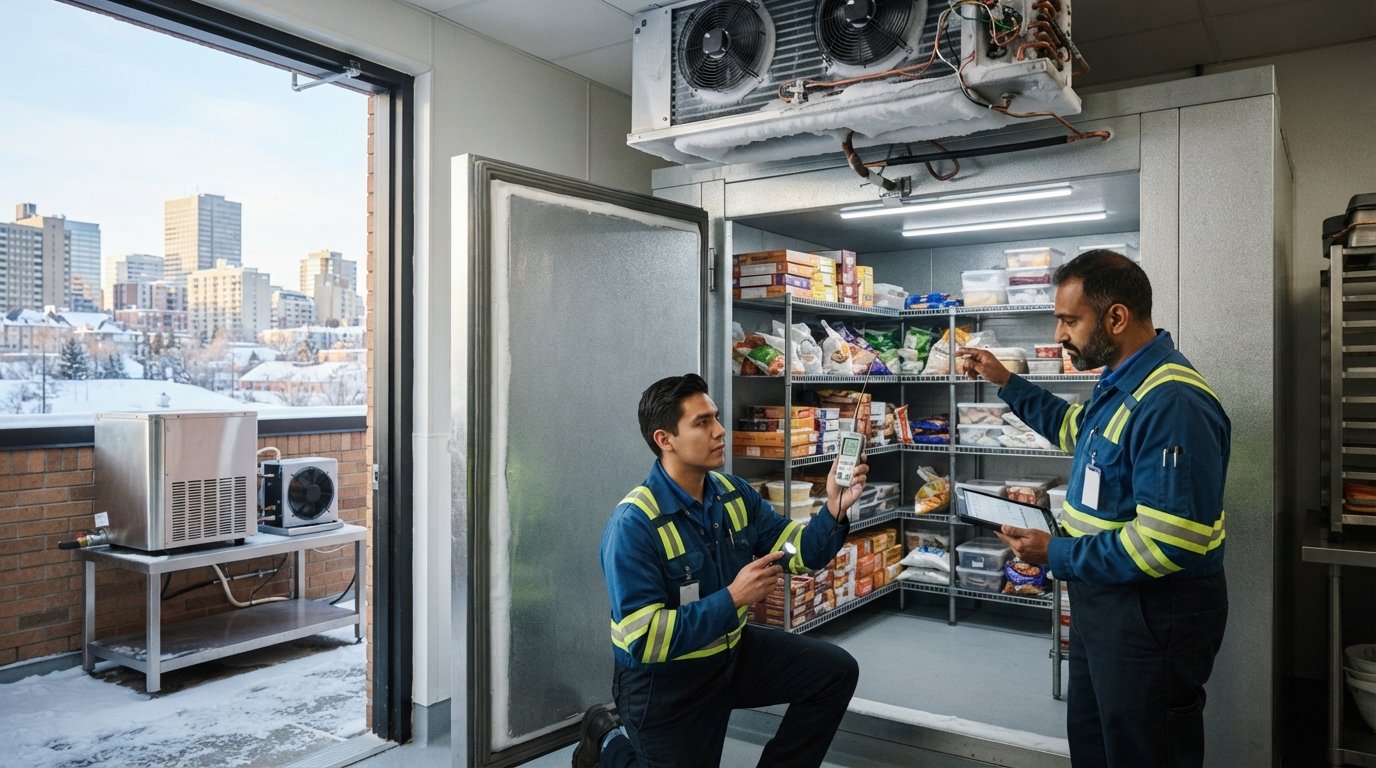
Temperature drift is a warning, not a reason to simply turn the thermostat lower. A commercial walk-in freezer should be set below -18C (0F), according to the Canadian Food Inspection Agency. For restaurants, walk-in freezer maintenance in Edmonton means finding the cause of a freeze-up or temperature rise, correcting the fault, and allowing conditions to stabilize.
It’s stressful when a freezer won’t hold temperature, especially when food storage and kitchen routines depend on it. The cause could be restricted airflow, a door that doesn’t seal, a defrost issue, or a refrigeration component that needs attention. Knowing what to look for helps you respond calmly and protect stored products.
This guide explains common causes of freezer icing, how repairs and temperature stabilization work, and why fresh and packaged products need different storage conditions. You’ll also find practical maintenance steps and guidance on when commercial refrigeration service can help restore steady operation.
Key Takeaways
- Look for airflow, door-seal, defrost, and refrigeration issues when a freezer starts icing up or drifting from its set temperature.
- A systematic diagnosis can identify the faulty component before replacement and help restore dependable operation.
- After adjusting a larger commercial refrigeration unit, allow a full day before checking whether its temperature has stabilized.
- According to the Canadian Food Inspection Agency, a commercial walk-in freezer should be set below -18C (0F).
- Store fresh foods and packaged products according to their different cold-storage needs, and keep air circulation around stored items in mind.
Freezer repair service and customer satisfaction
Effective walk-in freezer maintenance for restaurants in Edmonton starts with identifying the cause, not simply lowering the thermostat. Staff observations can help a technician diagnose the problem and restore steady operation.
Use this walkthrough to review practical care steps for a commercial walk-in freezer:
Recognizing Repair Needs
Watch for temperature swings, new frost, pooled water, unusual noise, or a door that won’t seal. Record when each symptom appears and whether it follows deliveries, cleaning, or frequent door use. These details give a technician a useful starting point. If products begin to soften or the unit stops cooling, treat the issue as urgent and arrange commercial refrigeration repair in Edmonton.
For urgent walk-in freezer repair, keep the door closed and move vulnerable stock only when a safe alternative is available. Share the displayed temperature, visible ice buildup, and any recent changes with the repair team. Clear information helps focus the initial diagnosis and avoids relying on guesswork. A cooler that also shows inconsistent temperatures needs attention, even if the freezer remains cold.
Cold Storage Repairs and Replacements
A repair may address a failed control, damaged seal, blocked drain, or component affecting airflow. The technician’s diagnosis should connect the symptoms to the underlying fault before replacing parts. Ask for a clear explanation of the repair and what to monitor afterward. If recurring failures or extensive damage make replacement more suitable, compare the equipment’s condition with the restaurant’s cold-storage needs.
Repairs and replacements should account for how staff use the room. Frequent door openings, crowded shelving, and changing delivery routines can affect performance. When arranging a repair in Edmonton, share these operating details along with the equipment’s symptoms. This context helps distinguish a component fault from an issue caused by access or loading practices.
Maintenance Schedules and Staff Tasks
Maintain a walk-in freezer with daily staff checks and scheduled deeper cleaning. Arrange professional maintenance according to the equipment’s condition and operating demands. Each day, record the displayed temperature, check the door seal, and look for unusual frost or leaks. Weekly, clean accessible surfaces and clear items blocking airflow. Monthly, inspect door hardware and review temperature logs for recurring changes.
Assign each task to a shift or role, then record when it is completed. For example, note a loose door closer before it causes repeated gaps in the seal. Clear records also help a technician determine whether a fault is new or recurring, making follow-up more focused.
Maintenance and Cleaning Safety Risks
Cleaning brings risks from slippery floors, cold exposure, and contact with moving or electrical parts. Keep staff clear of exposed equipment components, use cleaning products according to their labels, and dry the floor before reopening the room to traffic. Don’t attempt electrical or refrigeration repairs during routine cleaning.
Before washing, move stored products away from the cleaning area and keep water clear of electrical components. Stop work if ice makes the floor unstable or a door cannot open freely. These steps reduce avoidable slips and help staff distinguish routine cleaning from repair work that requires a qualified technician.
Appliance diagnostic and component replacement
A useful diagnosis separates symptoms from their cause. Start with safe observations, record operating conditions, and leave technical testing to a refrigeration professional.
For restaurant staff, troubleshooting means checking visible issues without opening electrical panels or refrigeration circuits. Note the displayed temperature, alarm message, frost pattern, door position, and whether fans are running. These observations can help distinguish a control issue from restricted airflow or a door that isn’t closing properly.
Component Replacement
Replace a component only after testing identifies it as faulty. A technician can inspect controls, sensors, fans, seals, and the defrost system, then explain how a failed component relates to the freezer’s symptoms. Replacing parts without diagnosis can leave the original cause unresolved, especially when multiple issues affect airflow or temperature control.
Before approving work, ask which component failed, what test confirmed the fault, and how the repair will be checked. For example, replacing a fan should be followed by a check that air circulates through the storage area. If a seal is replaced, confirm that the door closes evenly without visible gaps.
A clear service record helps with future decisions. Keep the repair date, replaced component, reported symptom, and post-repair observations together. If the same fault returns, these details give the next diagnostic visit a useful starting point. They can also help distinguish a recurring component failure from a different problem with similar symptoms.
Troubleshooting Common Freezer Problems
Restaurant staff can check the display, door closure, visible frost, and airflow obstructions, then record what they find. Keep the door closed during checks and move products only when safe storage is available. Don’t remove panels, handle wiring, or attempt refrigerant work. Those tasks require a qualified technician.
Use a simple sequence before calling for service:
- Read and record the temperature display or alarm.
- Check whether the door closes fully and its seal sits evenly.
- Look for blocked vents, heavy frost, water, or unusual fan noise.
- Note recent deliveries, cleaning, or changes in how the freezer is loaded.
Share those findings with the technician, including when the problem began and whether it changes after the door closes. This practical history can narrow the diagnostic path without staff guessing at a failed part. If recurring faults lead to replacement planning, a properly sized walk-in freezer installation can address the restaurant’s cold-storage needs.
After a repair, follow the technician’s instructions and monitor the display, airflow, and door operation. Record any new alarm or temperature change promptly. A consistent log makes it easier to tell whether the repair restored normal operation or whether further diagnosis is needed.
Causes of commercial refrigeration freeze-ups
Ice buildup often points to moisture, restricted airflow, or a defrost problem. Edmonton restaurant staff can reduce avoidable strain by limiting the time the door stays open, keeping vents clear, and recording recurring frost or temperature changes.
Moist air entering through an open door can condense and freeze on cold surfaces. Deliveries create more opportunities for warm air to enter, especially if staff prop the door open while unloading. A worn gasket or misaligned door can also let moisture in, even when the door appears closed. Inspect the seal for gaps and keep the entryway clear so the door closes fully.
Blocked airflow is another common problem. Stacked cartons can obstruct supply or return vents, leaving some areas colder while others warm up. Uneven circulation can hide ice buildup and make the refrigeration system work longer. Leave space around vents and avoid packing products tightly against interior surfaces.
A defrost fault can allow frost to build up on the evaporator coil. As ice thickens, it restricts airflow across the coil and reduces heat transfer. Staff may notice weaker airflow or a change in cooling performance. Don’t chip ice from coils or remove equipment panels. Record the pattern and seek professional diagnosis if frost returns after routine cleaning.
- Door habits: Group deliveries and retrieve ingredients together to reduce repeated openings.
- Loading: Keep vents clear and arrange cartons so cold air can circulate.
- Cleaning: Remove spills promptly and keep drains clear of debris.
- Records: Note frost location, display readings, and when symptoms appear.
A blocked drain can leave water inside the cabinet, where it may freeze near the floor or drain opening. Clean accessible drain areas during routine care, but don’t push tools into hidden lines. If water returns or ice forms in the same place, share that detail with a refrigeration technician. The location can help narrow down the cause.
Temperature controls matter, too. An unnecessarily low setting can increase operating demand without fixing a faulty seal, blocked vent, or defrost issue. Avoid repeated thermostat changes; record the current setting and symptoms instead. A technician can assess controls, sensors, coils, and defrost operation as a connected system rather than treating each patch of ice separately.
Regularly checking door seals, loading practices, and coil cleanliness helps reduce avoidable strain. Keep maintenance records with temperature logs so recurring conditions are easy to spot. If icing continues despite clear vents and a closed door, arrange a diagnostic visit before ice further obstructs the evaporator or disrupts food storage.
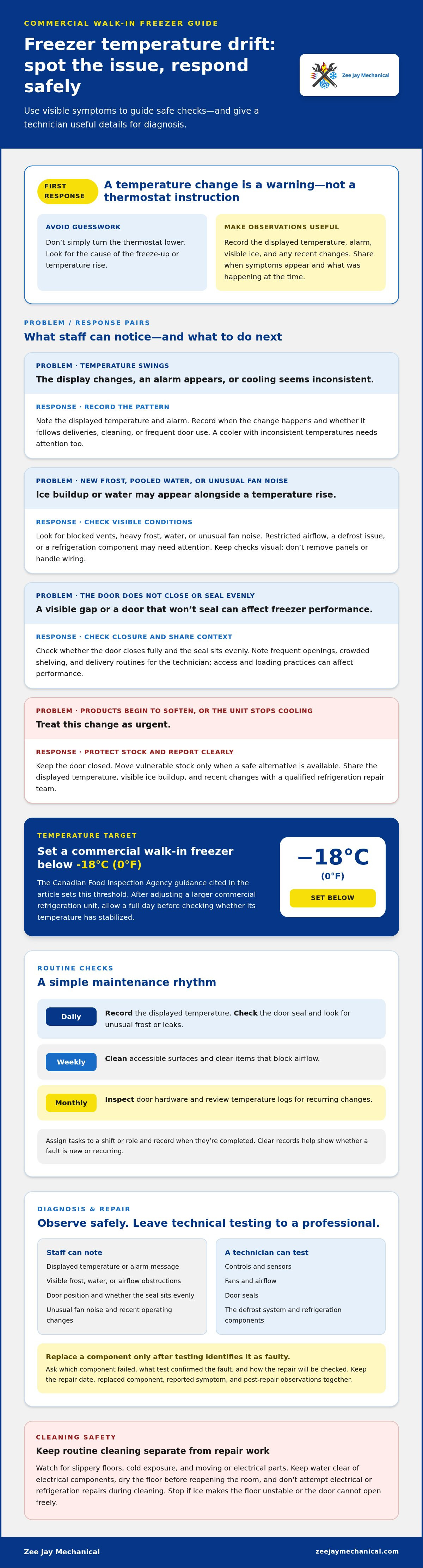
Refrigeration temperature stabilization
After adjusting a thermostat or completing a repair, allow the refrigeration system time to respond before judging the result. A single display reading is a checkpoint, not proof that product temperatures are stable.
For a larger commercial refrigeration unit, wait a full day after adjusting the temperature before checking whether it has stabilized. Avoid further changes during that period. Each adjustment changes the system’s target and makes it harder to tell whether the original setting was appropriate.
Use the same thermometer and measurement locations for each comparison. Record the time, displayed reading, and unusual conditions, such as a delivery or an extended door opening. A warm reading immediately after restocking may reflect recent activity, while recurring changes during normal operation deserve closer attention.
Keep a simple log with these details:
- The date and time of each reading.
- The freezer display and thermometer readings.
- Any adjustment, repair, or defrost event.
- Door openings, deliveries, or unusual loading.
Compare readings across the storage area rather than relying on one spot. A sensor near a cold-air outlet may not reflect conditions beside a heavily loaded shelf. Keep the thermometer in a consistent, representative location, away from the door and direct airflow. This makes comparisons after an adjustment more useful.
Loading also affects stabilization. A large delivery introduces products at different temperatures and changes the air conditions inside the room. Arrange cartons to keep airflow paths open, close the door promptly, and record the delivery time. Then compare later readings under more typical operating conditions.
If the display and a separate thermometer disagree, record both values instead of immediately changing the setting. Check that the thermometer is positioned consistently, then compare the readings again. A persistent difference may point to a sensor, control, or measurement issue that needs diagnosis.
After a repair, note what work was completed and when the system returned to operation. Check the readings after the full-day stabilization period, then continue monitoring the log during normal use. If temperatures keep shifting, share the readings and event notes with the refrigeration technician. This evidence can help narrow down whether the cause relates to controls, airflow, loading, or another operating condition.
Use stable readings alongside consistent door habits and clear airflow. A freezer that settles after one adjustment still needs routine monitoring, especially after deliveries or service work. Don’t judge the result from a single reading; a useful assessment depends on repeated measurements and the conditions recorded around them.
A commercial refrigerator in Edmonton generally has a life expectancy of about 10-15 years, depending on maintenance. Some commercial refrigerators can last as long as 20 years with good care and maintenance.
Fresh-food and packaged-product storage conditions
Organize products according to their storage needs, packaging, and cooling requirements. A freezer setting alone cannot correct poor loading, blocked airflow, or unsuitable packaging.
For Alberta restaurants, a commercial walk-in freezer should be set below -18C (0F), according to the Canadian Food Inspection Agency. This is the temperature target for the freezer, not a substitute for monitoring conditions around stored products.
The Alberta food-safety temperature guidance relevant to a commercial freezer is that same below -18C (0F) target. Staff should also follow the restaurant’s food-handling procedures and keep temperature records, rather than treating a thermostat setting as proof that every product is adequately cooled.
Fresh foods and packaged products need different storage approaches. For example, uncovered or poorly wrapped food can dry out, absorb odours, or collect frost. Use suitable food-grade packaging, seal it securely, and label containers so staff can identify contents without repeated handling.
Organize products by category and use. Place similar items together, separate raw ingredients from ready-to-serve products, and keep cartons clear of air outlets. Open airflow paths help cold air circulate around the load instead of creating isolated warm or heavily frosted areas.
- Label and date: Identify contents clearly so staff can rotate stock using the restaurant’s established procedure.
- Protect products: Close bags, wrap food, and secure container lids before storage.
- Leave air paths open: Keep products away from vents and avoid packing shelves tightly.
- Check the load: Look for damaged packaging, spills, or products placed in the wrong area.
Deliveries need particular care. Group items by storage location before opening the freezer, then put products away promptly and close the door. A prolonged open door brings warmer, moist air inside and can affect both cooling performance and product surfaces.
Use temperature records alongside visual checks. A steady display doesn’t show whether every shelf has equal airflow, so staff should note recurring frost, soft packaging, or products that feel warmer than expected. Record the location and report repeated patterns for investigation.
For consistent storage, match the room’s layout and loading practices to the restaurant’s products. If existing cold-storage space cannot support the required organization and airflow, plan a walk-in freezer installation around the kitchen’s storage needs.
Keep refrigerated items in their designated space rather than treating the walk-in freezer setting as a target for every product. A commercial reach-in refrigerator temperature is below -4C (40F). Match each product to its intended storage area, maintain clear labels, and include the reach-in in routine temperature checks and records. This helps staff distinguish refrigerator storage from frozen storage while keeping handling practices consistent across the kitchen.
Zee Jay Mechanical: Furnace Installation
Zee Jay Mechanical provides furnace installation and furnace repair, along with air conditioning installation and repair. These services support heating and cooling needs for Edmonton properties. For restaurant teams, the temperature logs, airflow checks, and maintenance steps in this checklist help clarify when a freezer problem needs attention.
Zee Jay Mechanical’s furnace installation and repair services address heating systems, while its air conditioning installation and repair services address building cooling equipment. Both are separate from a walk-in freezer. Identifying which system needs attention helps you take the right next step.
For help with furnace or air-conditioning needs, contact Zee Jay Mechanical to discuss your project.
Plan Your Next Step With Confidence
Turn your maintenance notes into a practical kitchen plan. A consistent routine for walk-in freezer maintenance for restaurants in Edmonton can help staff spot changes early and decide when the equipment needs closer assessment. Use the records to guide conversations about recurring issues, storage needs, and whether the setup suits daily operations.
If the freezer’s condition or capacity points to new equipment, Zee Jay Mechanical provides walk-in freezer installation. The company also offers furnace installation and repair, and air conditioning installation and repair. These services address different building needs, so identify which system requires attention before planning the work.
If your restaurant is planning its next cold-storage step, discuss the installation requirements and how the freezer will fit the kitchen’s workflow. Clear information about the space and intended use helps make the conversation practical.
Contact Zee Jay Mechanical to discuss your project and move forward with a clear plan.
Frequently Asked Questions
Is Your Walk In Freezer Not Staying Cool?
If your walk-in freezer isn’t staying cool, treat the change as a service concern rather than repeatedly adjusting the controls. For walk-in freezer maintenance for restaurants in Edmonton, note when the problem began, whether it followed a delivery shift, and whether the display shows an alarm. Keep the door closed and protect food according to your restaurant’s procedures. Share those observations with a refrigeration professional to help determine the next step.
What are signs a walk-in freezer needs professional repair?
Repeated breaker trips, a scraping fan sound, or a burning smell call for prompt professional attention. Don’t keep resetting a tripped breaker or reach behind electrical panels to investigate. Record the alarm or control message, when it appeared, and whether the freezer was operating normally beforehand. If staff notice a new sound during a quiet kitchen period, the timing can help a technician distinguish a persistent mechanical issue from routine operating noise.
Which Edmonton companies service commercial walk-in freezers, and do they offer emergency repairs?
Zee Jay Mechanical serves Edmonton with commercial HVAC maintenance and repair, as well as walk-in freezer installation. The company advertises 24/7 emergency support for urgent heating or cooling failures. If a freezer issue affects kitchen operations, describe the equipment and symptoms clearly when contacting the company; its stated freezer service is installation, while commercial HVAC maintenance and repair covers broader building systems. Keep product handling aligned with your restaurant’s food-safety procedures.
Disclaimer
The content of this article is for the general information purpose. Please contact us if you have any questions.