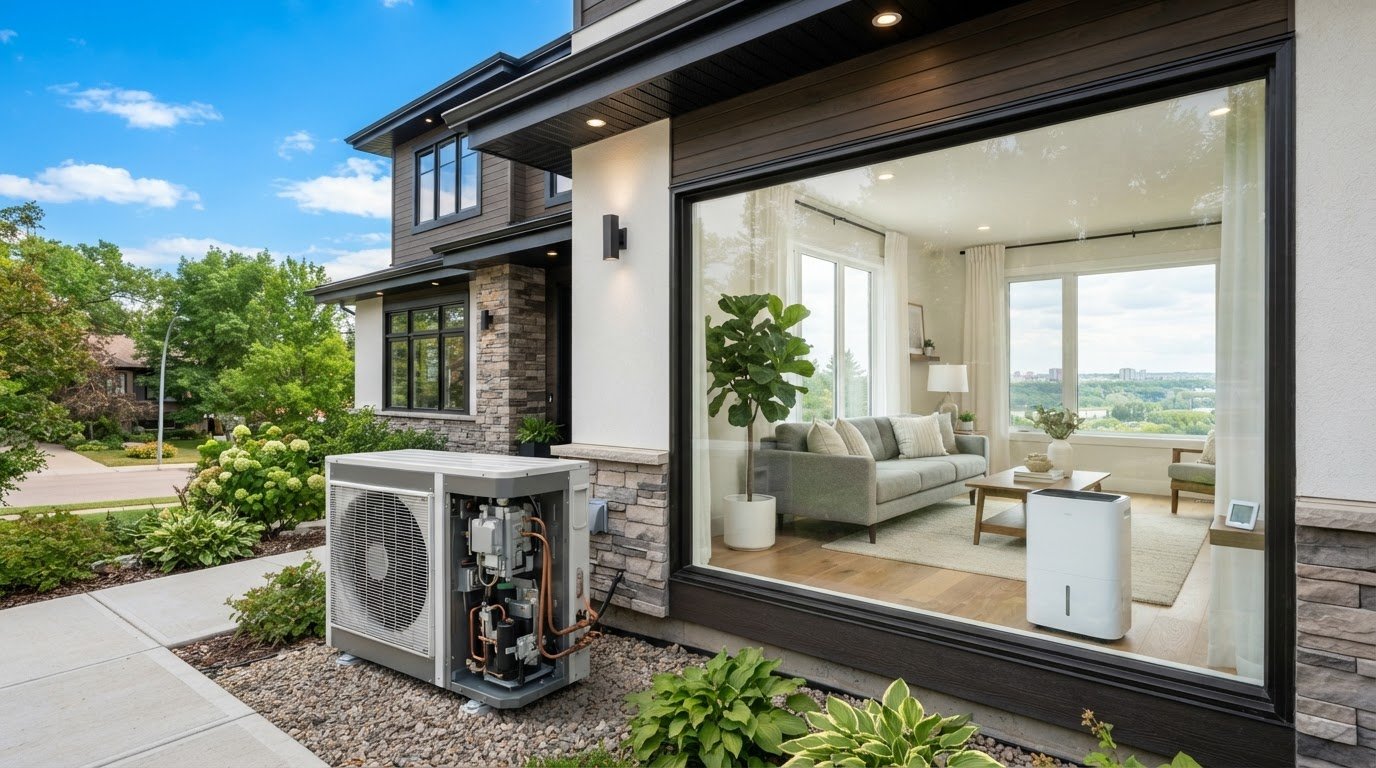
In an Edmonton summer, aim for indoor relative humidity of 40% to 50% for a comfortable home. To reduce humidity in a house in summer in Edmonton, measure the moisture level first, then reduce everyday sources of damp air and improve ventilation. If levels stay above that range, condensation and mould can become concerns.
Sticky rooms, fogged windows, or a damp-feeling basement can make indoor humidity hard to manage. Start by checking where moisture is building up, then use targeted steps to reduce it.
This guide explains what humidity readings mean, which materials can absorb moisture, and how to handle damp basements and use fans effectively. You’ll also learn when air conditioning can help and what signs may point to a ventilation or moisture problem that needs more attention.
Key Takeaways
- Use a hygrometer to track indoor humidity and spot patterns before choosing how to lower it.
- Reduce moisture from cooking, showers, and indoor laundry by managing the source and improving ventilation.
- If your basement feels damp, a dehumidifier can help; first consider whether outdoor air could add more moisture.
- Use ceiling, range hood, and exhaust fans strategically to move air and clear moisture after everyday activities.
1. What Absorbs Humidity in a House?
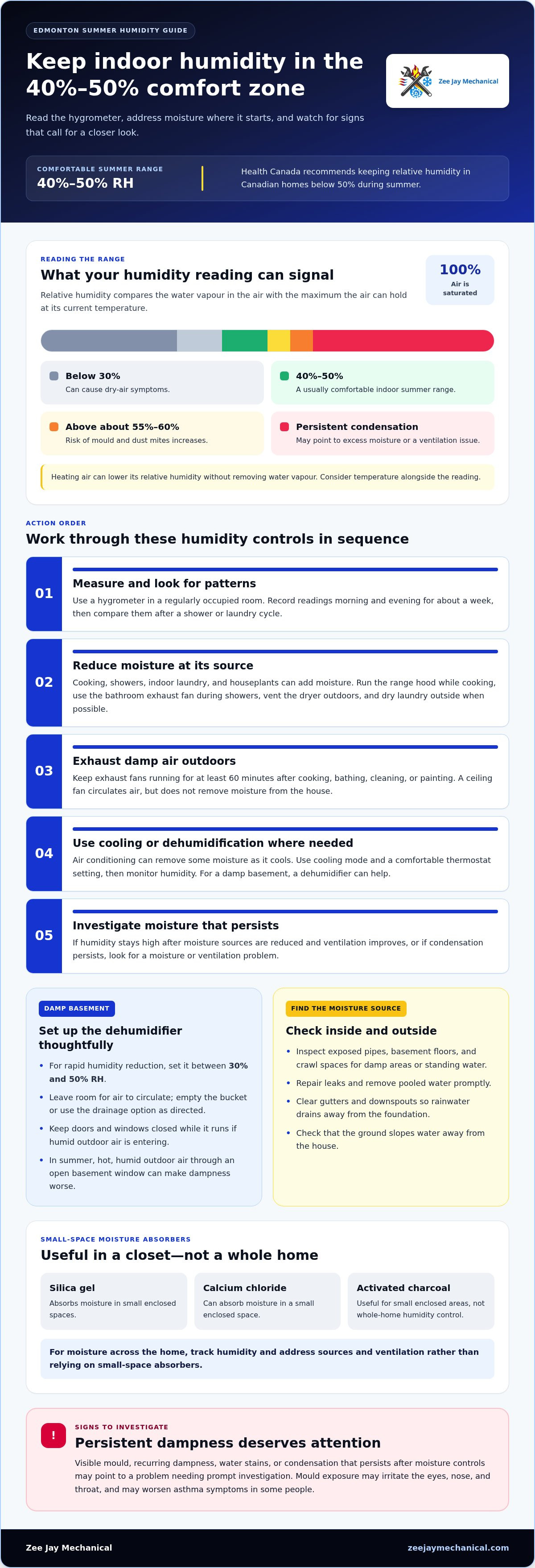
Learning how to reduce humidity in a house during an Edmonton summer starts with identifying where moisture enters the air. Cooking, showering, and drying laundry indoors add moisture, as do houseplants through transpiration. Run the range hood while cooking, switch on the bathroom exhaust fan during showers, and vent the clothes dryer outdoors. When possible, dry laundry outside to keep damp fabrics from adding moisture indoors.
In Alberta homes, indoor relative humidity of 40% to 50% is usually comfortable in summer. Health Canada recommends keeping relative humidity in Canadian homes below 50% during summer. Levels above about 55% to 60% increase the risk of mould and dust mites, while readings below 30% can cause dry-air symptoms. Persistent window condensation can point to excess moisture or a ventilation issue.
Silica gel, calcium chloride, and activated charcoal absorb moisture in small enclosed spaces, such as closets, but they won’t control humidity throughout a home. Use a hygrometer in a regularly occupied room and record readings in the morning and evening for about a week. Compare readings after a shower or laundry cycle to spot patterns.
A practical way to reduce humidity in an Edmonton house during summer is to use air conditioning, which can remove some moisture as it cools. Select cooling mode and a comfortable thermostat setting, then monitor humidity rather than lowering the temperature without checking the result.
Contact an HVAC or moisture-control professional if humidity stays high after you reduce moisture sources and improve ventilation, or if condensation persists. Visible mould, recurring dampness, or water stains also need prompt investigation, and professional remediation services such as MouldMen can help identify and safely resolve persistent issues.
2. What is relative humidity?
Relative humidity describes how much water vapour indoor air holds compared with the maximum it can hold at its current temperature. At 100% relative humidity, air is saturated at that temperature. Absolute humidity, by contrast, describes the actual amount of water vapour in the air. These measures behave differently: heating air can lower its relative humidity without removing water vapour, because warmer air can hold more moisture.
That temperature effect matters in Edmonton as seasons change. In summer, Health Canada recommends keeping relative humidity in Canadian homes below 50%. In winter, Health Canada recommends 30% to 35%. Cold outdoor conditions and indoor heating change how moisture behaves around windows and walls. If indoor air is too moist for a cold surface, water can form as condensation. If you increase heating, the relative humidity reading may fall even if the amount of water vapour stays similar.
Pay attention to physical clues as well as hygrometer readings. Condensation on windows can mean moist indoor air is meeting cold glass. Persistent dampness or mould deserves attention because mould exposure may irritate the eyes, nose, and throat, and may worsen asthma symptoms in some people. Very dry air can also cause discomfort. If wooden furniture or flooring begins to shrink, low indoor humidity may be a factor; check the room reading before making changes.
Compare hygrometer readings in rooms with different conditions, such as a heated living room and a cooler basement. Note temperature and humidity together, and look for recurring changes as outdoor weather shifts. A reading is a snapshot, not a direct measure of water in the building. Warmer air, for example, may show lower relative humidity while holding a similar amount of moisture. Tracking both measures over time helps distinguish temperature changes from moisture entering or being produced indoors.
3. How do I lower humidity if my basement feels damp?
A dehumidifier can remove excess moisture from a basement, bathroom, or laundry room. Set it between 30% and 50% relative humidity for rapid humidity reduction, then monitor the room with a hygrometer. Place the unit where air can circulate around it, and empty its collection bucket regularly or use its drainage option as directed. Keep doors and windows closed while it runs if humid outdoor air is entering the basement.
In summer, opening basement windows to dry the space can make humidity worse when outdoor air is hot and humid. Instead, use a dehumidifier and look for the moisture source. Cooking, laundry, or a plumbing leak can add moisture indoors. Check exposed pipes, basement floors, and crawl spaces for damp areas or standing water, then repair leaks and remove pooled water promptly. If water damage has already spread, professional recovery teams like TBC Restoration can help thoroughly dry and restore affected spaces.
Prevent recurring dampness outdoors, too. Clear debris from gutters and downspouts so rainwater drains away from the foundation. Check that the surrounding ground directs water away from the house, not toward it. These steps reduce the chance of water seeping into a basement or crawl space. If dampness returns after a leak is repaired, check for remaining water or another source.
How much does it cost to run a dehumidifier in Alberta? The cost depends on the unit’s power use, its operating time, and your electricity rate. Estimate it by multiplying the unit’s wattage by its hours of use and electricity rate, then dividing by 1,000.
Clean dehumidifier filters and collection parts as the manufacturer directs, since dust can restrict airflow. In winter, temperature changes affect relative humidity, so reassess the setting as conditions shift. Humidifiers need different care: clean their water tanks and filters as recommended, and avoid running one in a damp basement. If humidity rises despite moisture control, investigate leaks or ventilation rather than relying on the appliance alone.
4. Using ceiling, range hood, and exhaust fans
If you’re wondering how to reduce humidity in a house during summer in Edmonton, start by exhausting moisture where it’s produced. Switch on the range hood while cooking, especially when boiling water, and run the bathroom exhaust fan during showers. These fans carry damp air outdoors instead of letting it spread through the home. A ceiling fan circulates air but does not remove moisture from the house.
Keep exhaust fans running for at least 60 minutes after cooking, bathing, cleaning, or painting. This helps clear lingering moisture before it settles on windows, walls, or other cool surfaces. If your home lacks a modern, highly functional ventilation system, use ceiling fans throughout the home and exhaust fans where needed. Compare indoor relative humidity readings before and after these activities to see how the ventilation is working.
Ceiling fans keep air moving through occupied rooms and help reduce stagnant pockets. After a shower, for example, run the bathroom exhaust fan and use a ceiling fan to circulate air in nearby spaces. If condensation still gathers on windows, use a dehumidifier or ventilation fan to help manage moisture.
Outdoor weather affects whether opening windows will help. Fresh air can circulate when conditions permit, but hot, humid air can make a damp basement worse. To understand how to reduce humidity in your house during summer in Edmonton, compare indoor humidity readings before and after opening windows. If readings rise, close the windows and use targeted exhaust or dehumidification instead.
Make fan use part of your routine: run the range hood while cooking, switch on the bathroom exhaust fan during showers, and let the fans continue running afterward. If humidity stays high, look for another source, such as indoor laundry or a leak. Persistent condensation or dampness calls for investigating the cause, not relying on air circulation alone.
Zee Jay Mechanical: Furnace Installation
Zee Jay Mechanical provides air conditioning installation and repair in Edmonton. Since air conditioning can help reduce indoor humidity as it cools, a properly operating system can support home comfort during humid summer weather. If your system isn’t cooling effectively, our team can provide repair. If you need a new system, Zee Jay Mechanical also handles air conditioning installation.
Furnace installation and repair are available for heating needs, but a furnace isn’t the solution to summer humidity. Start by tracking indoor humidity, reducing moisture sources, and using ventilation. If your air conditioner needs professional attention, contact Zee Jay Mechanical or visit zeejaymechanical.com.
Make Humidity Control Part of Home Care
Treat humidity management as ongoing care for your Edmonton home, not a one-time summer fix. As the weather changes, note which rooms feel uncomfortable and whether the issue follows a particular activity or time of day. A brief home-care note can help you describe the pattern clearly if you need mechanical support.
A practical approach to how to reduce humidity in a house during an Edmonton summer is to connect what you notice indoors with the systems that help keep your home comfortable. If your air conditioner needs attention, book service with Zee Jay Mechanical, an Edmonton HVAC team.
Contact Zee Jay Mechanical today to discuss your home’s heating or cooling needs. A clear next step can make home comfort easier to manage.
Frequently Asked Questions
What is the best humidity for your home in Alberta?
For summer comfort in Alberta, aim for indoor relative humidity between 40% and 50%. In winter, Health Canada recommends 30% to 35%, since cold conditions can make moisture condense on windows and walls. Adjust your approach as seasons change, and use a hygrometer in the rooms where you spend the most time. A bedroom reading can differ from a basement reading.
What Absorbs Humidity in a House?
Desiccants such as silica gel, calcium chloride, and activated charcoal absorb moisture in small, enclosed spaces. They can help in a closet or storage cupboard, but they aren’t a substitute for controlling moisture throughout a room. In a damp laundry area, place a dehumidifier where air can move freely around it, and clean its filter and water reservoir according to the manufacturer’s directions.
How do I lower humidity if my basement feels damp?
Use a dehumidifier in the basement and set it between 30% and 50% relative humidity. During humid summer weather, keep basement windows closed, since warm outdoor air can bring in more moisture. Check for plumbing leaks, standing water, or damp patches near foundation walls. Clear gutters and downspouts so rainwater drains away from the home rather than collecting beside the basement.
What Is the Fastest Way to Lower Indoor Humidity?
Run a dehumidifier in the dampest room and set its target between 30% and 50% relative humidity. Keep exterior windows closed when outdoor air is hot and humid, and remove moisture at its source, such as a leak or wet laundry. Air conditioning also helps lower indoor humidity. Use a hygrometer to track whether the room’s reading falls as the equipment runs.
What humidity levels are considered safe?
For Canadian homes, Health Canada recommends relative humidity below 50% in summer and between 30% and 35% in winter. These ranges help limit conditions associated with excess moisture, but a reading alone doesn’t diagnose mould or explain a leak. Persistent condensation, water stains, or visible mould need attention even when a hygrometer reading appears to be within the recommended range.
What indoor humidity level is recommended in summer in Edmonton, Alberta?
In an Edmonton summer, keep indoor relative humidity below 50%; a level between 40% and 50% is usually comfortable in Alberta homes. Take readings in more than one room, since a basement can differ from an upstairs living space. Recording morning and evening measurements over about a week helps reveal whether humidity changes with outdoor weather or household routines.
Disclaimer
The content of this article is for the general information purpose. Please contact us if you have any questions.